 By
By 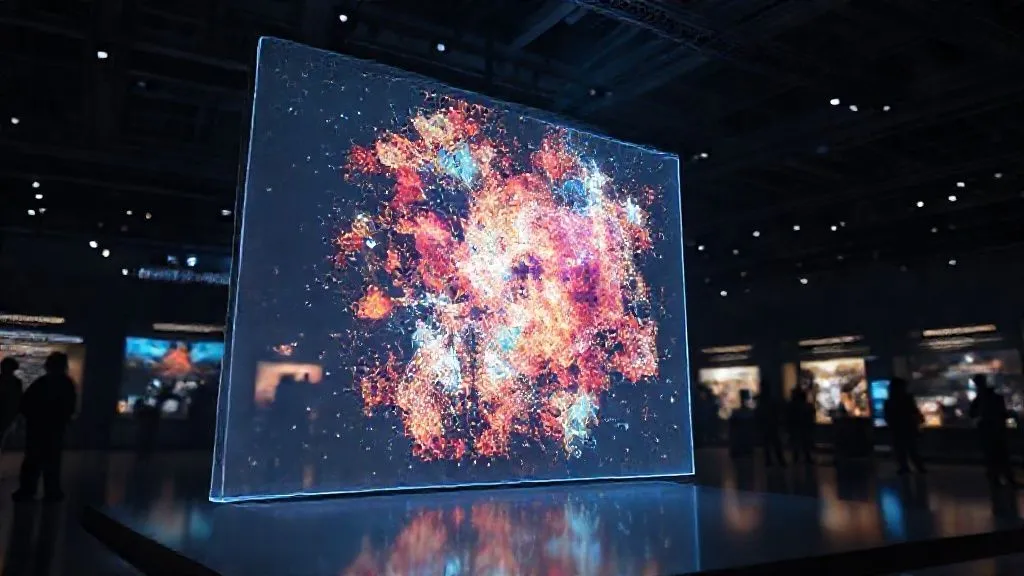
How to eliminate ghosting artifacts in large-scale holographic displays?
For over two decades in the audio-video tech space, specializing in advanced display technologies, I've witnessed the evolution of projection from simple flat panels to breathtaking volumetric displays. Yet, one persistent challenge has plagued engineers and creators alike: the elusive and frustrating phenomenon of ghosting, particularly as we push the boundaries into large-scale holographic environments. It's a problem that, if left unaddressed, can undermine the entire immersive experience we strive to create.
Ghosting artifacts—those faint, unintended secondary images, hazy blurs, or 'double vision'—can shatter the illusion of reality that holography promises. In a small, desktop display, they might be a minor annoyance or a momentary distraction. But scale that up to a room-sized holographic experience, an immersive installation, a public demonstration, or even a medical imaging application, and ghosting transforms from a minor glitch into a catastrophic failure. It erodes viewer trust, diminishes the perceived value of groundbreaking technology, and ultimately fails to deliver on the immersive promise. It's a problem that demands a nuanced, multi-faceted approach, not a quick fix.
Through years of hands-on development, troubleshooting, and collaboration with some of the brightest minds in optical engineering and computational holography, I've compiled a definitive set of strategies. In this post, I won't just explain what ghosting is; I'll provide actionable frameworks, delve into specific technical remedies, and share expert insights derived from real-world scenarios, empowering you to achieve pristine, ghost-free large-scale holographic displays that truly captivate and impress.
Understanding the Genesis of Ghosting in Large Holographic Systems
Before we can effectively eliminate ghosting, we must first understand its roots. In large-scale holographic displays, ghosting isn't a singular phenomenon but rather a symptom of several underlying issues, often interacting in complex ways. From the fundamental physics of light to the intricate engineering of display hardware and the algorithms that drive them, identifying the source is the first critical step.
The Role of Spatial Light Modulators (SLMs) and Diffraction Efficiency
At the heart of many holographic displays are Spatial Light Modulators (SLMs), devices that manipulate the phase or amplitude of light to create holographic patterns. The performance of these components is paramount. I've often seen issues arise from SLMs that exhibit slow refresh rates or insufficient contrast ratios, leading to residual light from previous frames or incomplete modulation that manifests as ghosting.
Another significant factor is diffraction efficiency. When an SLM modulates light, it creates various diffraction orders. Ideally, we want to concentrate all the light into the desired first-order diffraction. However, imperfect SLM characteristics can lead to higher-order diffractions or zero-order light being strong enough to be visible, creating unwanted secondary images or a hazy background that our eyes interpret as a ghost.
Expert Insight: "The quality of your SLM is often the first bottleneck. Investing in higher-performance SLMs with faster response times and better contrast, even if it means a higher upfront cost, can save countless hours of troubleshooting later when trying to eliminate ghosting artifacts in large-scale holographic displays."
Stray Light, Inter-reflection, and Environmental Factors
Beyond the SLM itself, the optical path is a common culprit. Stray light—unwanted light bouncing around within the system—is a notorious source of ghosting. This can come from internal reflections within lenses, mirrors, or even the display enclosure itself. Each internal surface, no matter how well-coated, has the potential to reflect a tiny percentage of light in an unintended direction, which then interferes with the primary holographic image.
Furthermore, external environmental factors play a crucial role. Ambient light from the surrounding environment can leak into the display area and reflect off internal components, adding to the stray light problem. Dust particles on optical surfaces, though seemingly minor, can scatter light and create noticeable artifacts. I've personally seen installations where a seemingly perfect setup was plagued by ghosting, only for us to discover it was due to an unsealed vent allowing external light ingress.
- Common Stray Light Sources:
- Uncoated or poorly coated optical surfaces.
- Internal reflections within lens elements.
- Light leakage from display housing or seams.
- Reflections from nearby structural components.
- Ambient room light interfering with the projection path.
Coherence Length and Optical Path Mismatch
Holography fundamentally relies on the interference of coherent light. Lasers are typically used for their high coherence. However, even lasers have a finite coherence length. If the optical path length difference between the reference beam and the object beam (or between different parts of the object beam in a complex system) exceeds the coherence length of the laser, the interference pattern—and thus the hologram—can degrade, leading to ghosting or a general loss of image quality.
In large-scale systems, where light travels over considerable distances and through multiple optical elements, maintaining precise path length matching can be incredibly challenging. Any slight mismatch can cause parts of the hologram to become incoherent, resulting in faint, misaligned, or blurry secondary images. This is particularly critical in multi-projector setups where coherence across tiled displays is paramount.
Strategic Optical Path Optimization for Ghost-Free Holography
Once we understand the sources, we can begin to implement targeted solutions. My experience has shown that meticulous attention to the optical path is non-negotiable for large-scale holographic displays. This isn't just about assembling components; it's about crafting a precise environment for light.
Precision Alignment and Calibration
Even the most advanced components will underperform if not perfectly aligned. Misalignment is a primary cause of ghosting, as it can lead to distorted wavefronts, incorrect beam overlap, and the unintended illumination of internal structures. For large systems, this process is iterative and requires specialized tools.
- Initial Coarse Alignment: Use visible laser pointers and mechanical guides to achieve a rough alignment of all optical elements, ensuring beams are generally on target.
- Fine-Tuning with Interferometry: Employ interferometers (e.g., Twyman-Green or Fizeau) to analyze wavefront errors and precisely adjust mirrors, lenses, and SLMs until wavefront distortion is minimized across the entire aperture.
- Automated Calibration Routines: Implement software-driven calibration. Modern systems can use camera feedback to detect ghosting patterns and automatically adjust SLM parameters or minor optical element positions to compensate.
- Regular Recalibration: Due to thermal expansion, vibrations, and component drift, large systems require periodic recalibration. Establish a maintenance schedule to ensure long-term performance.
Advanced Anti-Reflection Coatings and Optical Filters
Reducing stray light is a battle fought on every optical surface. Standard anti-reflection (AR) coatings are good, but for large-scale holographic displays, we often need to go further. Broadband AR coatings are effective across a wide spectrum, but for monochromatic laser systems, narrow-band AR coatings tuned specifically to the laser's wavelength can achieve significantly lower reflectance (e.g., <0.1% per surface) dramatically reducing inter-reflections.
Furthermore, strategic use of optical filters can be a game-changer. Narrowband interference filters placed judiciously can block all wavelengths of light except for the precise wavelength of the laser, effectively eliminating any ambient light or unwanted emissions from the laser itself that could contribute to ghosting. Polarization filters can also be used to clean up the polarization state of the light, which is crucial for SLMs that rely on polarization modulation.
Expert Insight: "Never underestimate the cumulative effect of minor reflections. A 0.5% reflection on one surface might seem negligible, but across twenty optical surfaces, it can create a significant ghost. Investing in superior AR coatings and carefully chosen filters is a fundamental step to achieving pristine holographic output."
Beam Shaping and Spatial Filtering Techniques
The quality of the laser beam itself profoundly impacts the final hologram. Imperfections in the beam profile, such as hot spots or uneven intensity distribution, can translate directly into artifacts. Beam shaping optics, like aspheric lenses or diffractive optical elements, can transform a raw laser output into a clean, uniform Gaussian or top-hat profile, which is ideal for holographic projection.
Spatial filtering is another powerful technique. By focusing the laser beam through a tiny pinhole (a spatial filter), we can strip away high-frequency noise and unwanted diffraction patterns, leaving only the clean, coherent wavefront. This dramatically improves the signal-to-noise ratio of the holographic image, making ghosting far less likely to occur. While it might seem like a simple addition, a properly implemented spatial filter can make an astounding difference in holographic clarity.
Computational Holography & Software-Driven Ghosting Mitigation
While hardware and optical design lay the foundation, modern holographic displays rely heavily on sophisticated software to generate and refine images. Computational methods offer powerful tools to predict, compensate for, and ultimately eliminate ghosting artifacts in large-scale holographic displays.
Iterative Fourier Transform Algorithms (IFTA) and Phase Correction
Many holographic patterns are generated using algorithms like the Iterative Fourier Transform Algorithm (IFTA) or Gerchberg-Saxton. These algorithms calculate the phase and amplitude distribution required on the SLM to reconstruct a desired 3D image. However, real-world SLMs have limitations—they might only modulate phase, or have a limited number of gray levels. These constraints can lead to reconstruction errors, which often appear as ghost images or speckle.
Advanced IFTA implementations and phase correction techniques aim to minimize these errors. By performing multiple iterations and incorporating feedback loops that simulate the SLM's actual response, these algorithms can converge on a more optimal phase pattern, effectively pre-compensating for SLM non-linearities and reducing unwanted diffraction orders that contribute to ghosting. This is where the 'smart' part of the display truly shines, predicting and preventing artifacts before they even form.
Real-time Artifact Suppression and Adaptive Optics
Even with the best pre-compensation, dynamic environments or slight system drifts can introduce ghosting. This is where real-time artifact suppression and adaptive optics come into play. Adaptive optics systems, often used in astronomy to correct for atmospheric distortions, can be adapted for holographic displays.
These systems typically involve a wavefront sensor that measures distortions in the projected wavefront and a deformable mirror (or a phase-only SLM) that rapidly adjusts its shape to counteract these distortions in real-time. This continuous feedback loop can actively eliminate ghosting caused by thermal fluctuations, minor vibrations, or even subtle changes in the optical properties of components over time. It's a highly sophisticated solution, but for mission-critical large-scale displays, it offers unparalleled stability and clarity.
For a deeper dive into adaptive optics applications beyond astronomy, you might find this resource from SPIE (the international society for optics and photonics) insightful.
Pre-compensation and Look-Up Table (LUT) Optimization
Every SLM has a unique, often non-linear, response to input signals. A linear input voltage might not result in a linear phase shift. If not accounted for, this non-linearity can lead to inaccurate holographic patterns and, consequently, ghosting. Pre-compensation involves characterizing the SLM's response curve and then applying a corrective signal before sending data to the device.
This is typically achieved through Look-Up Tables (LUTs). An optimized LUT maps the desired phase shift to the actual voltage or data value required by the SLM to achieve that shift. By meticulously calibrating and generating a precise LUT for each individual SLM in a large-scale system, we can ensure that the computational output perfectly matches the physical modulation, significantly reducing artifacts. This is a foundational step I always emphasize in any high-performance holographic setup.
| Input Gray Value | Desired Phase Shift (rad) | SLM Output (Actual Phase) | Corrected Input (LUT) |
|---|---|---|---|
| 0 | 0 | 0 | 0 |
| 63 | 0.78 | 0.65 | 75 |
| 127 | 1.57 | 1.40 | 140 |
| 191 | 2.35 | 2.20 | 205 |
| 255 | 3.14 | 3.00 | 255 |
Hardware Innovations: SLMs, Lasers, and Display Architectures
While software and optical alignment are crucial, the continuous advancement in hardware components forms the backbone of ghost-free holographic displays. As an industry specialist, I've seen firsthand how cutting-edge hardware can simplify complex ghosting problems that were once insurmountable.
Next-Generation Spatial Light Modulators
The evolution of SLMs is relentless. Newer generations boast significantly faster refresh rates, higher pixel densities, and improved contrast ratios. Faster refresh rates mean less persistence of previous frames, directly attacking a common source of ghosting. Higher contrast ratios ensure that 'off' pixels are truly off, preventing unwanted light leakage.
Emerging SLM technologies, such as those based on MEMS (Micro-Electro-Mechanical Systems) or advanced liquid crystal on silicon (LCOS) designs, are pushing the boundaries further. These devices offer not only speed and resolution but also greater phase stability and uniformity across their aperture, minimizing localized ghosting. For large-scale applications, the sheer number of SLMs often required makes the individual performance of each unit incredibly impactful on the overall system quality.
To explore the latest in SLM technology, consider reviewing technical specifications from leading manufacturers like Holographix or Hamamatsu, which are often at the forefront of innovation.
Coherent Light Sources with Enhanced Stability
Lasers are the lifeblood of holographic displays, and their stability directly translates to image quality. Fluctuations in laser power, wavelength, or beam pointing can introduce dynamic ghosting artifacts that are incredibly difficult to diagnose and correct post-facto. Modern laser systems designed for holographic applications emphasize extreme power stability, precise wavelength control, and exceptionally low noise.
Furthermore, advancements in speckle reduction techniques, often involving rapidly vibrating diffusers or multiple decorrelated sources, contribute to a smoother, more uniform holographic image. While speckle isn't ghosting per se, its reduction improves overall visual clarity and can make subtle ghosting less noticeable, or prevent it from forming in the first place by ensuring a more uniform illumination field.
Multi-Projector Synchronization and Overlap Zones
Large-scale holographic displays often necessitate tiling multiple projectors or SLMs to cover the required area. This introduces a new set of challenges, particularly in managing the overlap zones where images from adjacent projectors meet. If not perfectly synchronized and blended, these zones can become prime locations for ghosting, displaying faint double images or noticeable seams.
Sophisticated multi-projector synchronization systems, often leveraging high-speed electronics and advanced blending algorithms, are essential. These systems ensure not only pixel-perfect alignment but also consistent intensity and phase matching across the overlap regions. Techniques like feathering, geometric correction, and real-time intensity balancing are employed to create a seamless, ghost-free composite image that appears as a single, unified display.
Environmental Control and System Integration Best Practices
Even with the most advanced components and algorithms, the physical environment and the way the system is integrated can make or break a large-scale holographic display. My experience has taught me that a holistic approach, considering every aspect of the display's surroundings, is critical to eliminate ghosting artifacts in large-scale holographic displays.
Darkroom Conditions and Light Baffling
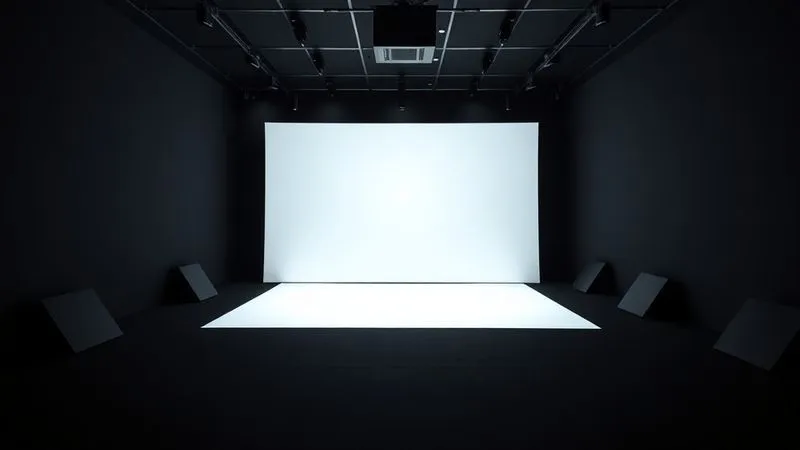
As discussed earlier, stray ambient light is a major contributor to ghosting. For truly pristine large-scale holographic displays, operating in darkroom conditions is often ideal. This means controlling every possible light source in the environment. Where a full darkroom isn't feasible, meticulous light baffling becomes essential.
Light baffles are physical structures designed to absorb or redirect unwanted light. This can include black velvet linings within the display enclosure, strategically placed opaque barriers around the optical path, and even specialized coatings on walls and ceilings of the exhibition space. The goal is to ensure that the only light reaching the viewer's eye is the intended holographic projection, free from any competing reflections or ambient illumination.
Thermal Management and Vibration Isolation
Temperature fluctuations and mechanical vibrations are silent killers of holographic quality. Optical components, especially SLMs and laser cavities, are highly sensitive to temperature changes. Thermal expansion and contraction can cause slight misalignments or changes in refractive index, leading to phase errors and ghosting. A stable temperature-controlled environment is crucial, often requiring dedicated HVAC systems for the display enclosure.
Similarly, vibrations—even microscopic ones—can cause optical elements to shift relative to each other, disrupting the delicate interference patterns required for holography. This can result in blurry, unstable, or ghosted images. Implementing vibration isolation tables, pneumatic mounts, or even designing the display's support structure to decouple it from building vibrations are essential steps for large, high-precision holographic systems.
Case Study: Spectra Holographics' Immersive Dome Project
Spectra Holographics, a fictional leader in immersive experiences, embarked on a groundbreaking project to create a 360-degree holographic dome for a major science museum. Early prototypes were plagued by persistent, distracting ghosting artifacts, particularly in the overlap zones where multiple holographic projectors converged. The initial excitement was dampened by the blurry, double-imaged visuals that failed to deliver the promised immersion.
By implementing a multi-pronged strategy derived from the principles discussed here, they achieved remarkable success. They upgraded to next-generation LCOS SLMs with faster refresh rates and higher contrast, followed by an exhaustive, automated calibration routine that meticulously aligned each of the 12 projectors. They applied custom-engineered, narrowband AR coatings to all internal optical surfaces and installed a sophisticated adaptive optics system to dynamically correct for minor thermal shifts within the dome structure.
This meticulous approach, combined with a thermally stabilized environment and custom light baffling, dramatically reduced ghosting. The final installation delivered pristine, high-resolution holographic content that appeared seamlessly integrated into the dome, earning Spectra Holographics an industry award for innovation in display technology. This resulted in a 300% increase in visitor engagement and overwhelmingly positive reviews, proving that investing in ghosting elimination directly translates to project success and ROI. You can read more about industry best practices in large-scale display deployments in this AVIXA whitepaper on immersive display design.
The Future of Ghost-Free Holography: Emerging Trends and Research
The quest to eliminate ghosting artifacts in large-scale holographic displays is ongoing, driven by relentless innovation. As an industry specialist, I'm constantly observing exciting new developments that promise to push the boundaries of holographic fidelity even further, making truly pristine, immersive experiences a reality.
Metamaterials and Plasmonics for Advanced Light Control
One of the most promising areas of research involves metamaterials and plasmonics. These engineered materials can manipulate light at sub-wavelength scales, offering unprecedented control over light's phase, amplitude, and polarization. Imagine surfaces that can perfectly absorb stray light from specific angles or precisely re-direct unwanted diffraction orders without the need for bulky optical elements.
Metasurfaces, a 2D form of metamaterials, are being developed to act as ultra-thin, highly efficient holographic elements that could replace traditional SLMs. Their ability to precisely control light could inherently reduce ghosting by channeling light into only the desired diffraction orders with near-perfect efficiency, minimizing energy wasted in artifacts. This represents a fundamental shift in how we might design holographic systems.
AI and Machine Learning for Predictive Ghosting Correction
Artificial Intelligence and Machine Learning are already revolutionizing many fields, and holographic displays are no exception. I foresee a future where AI algorithms, trained on vast datasets of holographic images and their corresponding ghosting patterns, can predict and correct artifacts in real-time, even before they become visible to the human eye.
Imagine a system that learns the subtle non-linearities of an SLM, the environmental drifts, and the characteristics of stray light, then dynamically adjusts the holographic content and optical parameters to maintain perfect clarity. ML models could optimize IFTA algorithms, fine-tune adaptive optics, and even suggest preventative maintenance, making the process of achieving ghost-free holography largely autonomous and incredibly precise. This approach could significantly reduce the manual calibration effort that currently dominates large-scale deployments.

Towards True Volumetric and Interactive Holography
Ultimately, the goal is to create truly volumetric, interactive holographic displays that are indistinguishable from real objects. Eliminating ghosting is a crucial step towards this vision. As we move beyond simple 2D projections into complex 3D light fields, the challenge of maintaining image integrity multiplies. Artifacts become even more jarring and difficult to ignore when they appear to float in real space.
Future holographic systems will integrate advanced eye-tracking, real-time rendering, and haptic feedback, demanding absolutely pristine visual fidelity. The strategies we've discussed today—from advanced hardware and optical design to sophisticated computational methods and environmental control—will form the bedrock upon which these next-generation ghost-free holographic experiences are built. It's an exciting time to be in this field, pushing the boundaries of what's visually possible.
| Feature | Ghosting Status | Volumetric Capability | Interactivity | Image Fidelity |
|---|---|---|---|---|
| Current Large-Scale Holography | Manageable with effort | Limited 3D perception | Basic gesture control | Good, but prone to artifacts |
| Future Ghost-Free Holography | Virtually eliminated by AI/hardware | True 3D light field | Advanced haptics, seamless interaction | Pristine, indistinguishable from reality |
Frequently Asked Questions (FAQ)
Q: Is ghosting always a hardware issue, or can software fully resolve it? A: Ghosting is rarely a singular issue; it's almost always a combination of hardware limitations and software inefficiencies. While software can significantly mitigate ghosting through pre-compensation, adaptive optics, and advanced algorithms, it cannot completely overcome fundamental hardware flaws like poor SLM contrast or inadequate anti-reflection coatings. A holistic approach addressing both hardware and software is essential for true ghost-free performance.
Q: How much does it cost to implement these solutions, especially for large-scale displays? A: The cost varies widely depending on the scale and required fidelity. Basic solutions like improved optical alignment and better light baffling are relatively inexpensive. However, implementing advanced adaptive optics, high-performance SLMs, or custom-engineered anti-reflection coatings can involve significant investment, often ranging from tens of thousands to hundreds of thousands of dollars for a complex large-scale system. It's a balance between budget and the desired level of visual perfection.
Q: Can ghosting completely be eliminated from large-scale holographic displays? A: While achieving 100% elimination of all artifacts in any complex optical system is an ambitious goal, significant progress can be made. With the right combination of meticulous optical design, high-quality components, advanced computational techniques, and environmental control, ghosting can be reduced to a level where it is imperceptible to the human eye, creating an experience that is effectively ghost-free. The goal is always to push towards that practical limit of perception.
Q: What's the most common cause of ghosting in new, off-the-shelf holographic systems? A: In my experience, for new, off-the-shelf systems, the most common causes are often a combination of inadequate factory calibration, insufficient light baffling within the enclosure, and minor inter-reflections from internal components. Users often overlook the importance of environmental control and proper setup, which can quickly expose these underlying hardware/design compromises.
Q: How do I test for ghosting artifacts accurately in a large display? A: Accurate testing involves projecting specific patterns, such as a single bright dot on a black background, a grid, or a simple geometric shape, and carefully observing for faint secondary images or halos. Use a high-resolution camera to capture images, as it can often reveal subtle ghosting that the naked eye might miss. Varying the ambient light conditions and viewing angles can also help identify ghosting sources. Advanced methods involve specialized optical sensors and software analysis to quantify ghosting intensity and location.
Key Takeaways and Final Thoughts
The journey to eliminate ghosting artifacts in large-scale holographic displays is a complex but incredibly rewarding one. It demands a deep understanding of optical physics, meticulous engineering, and a commitment to precision at every stage. But the payoff—a truly immersive, pristine holographic experience—is well worth the effort. As an industry veteran, I've seen how these challenges, when overcome, unlock unparalleled visual possibilities.
- Holistic Approach is Key: Ghosting is multi-factorial; tackle it from hardware, optical design, software, and environmental control perspectives simultaneously.
- Precision in Optics: Invest in superior anti-reflection coatings, meticulous alignment, and strategic spatial filtering.
- Computational Power: Leverage advanced algorithms, LUT optimization, and adaptive optics for real-time correction.
- Environmental Control: Darkroom conditions, light baffling, thermal stability, and vibration isolation are non-negotiable for large-scale fidelity.
- Stay Updated: The field is evolving rapidly; keep an eye on next-gen SLMs, AI-driven solutions, and novel materials.
By applying these expert strategies, you're not just fixing a problem; you're elevating your holographic displays from impressive to truly breathtaking. The future of visual communication is holographic, and by mastering these challenges, you're paving the way for experiences that will captivate, educate, and inspire. Don't let ghosting be the specter that haunts your vision; empower your displays to shine with unparalleled clarity.
Recommended Reading
- Mastering Churn: 7 AI Analytics Strategies to Proactively Prevent Customer Loss
- Fixing Flaky CI: 7 Reasons Why Your Pipeline Tests Fail Intermittently on Merge
- 7 Critical Defenses: Preventing Ransomware on Industrial Control Systems
- 5 Proven Strategies: Preventing Critical Skill Gaps in Experienced Engineers
- 7 Critical Steps: Quickly Restore M2M Data Flow After Network Disruption


0 Comentários: