 By
By 
What Causes Accuracy Degradation in Advanced Biometric Sensors?
For over two decades in the trenches of emerging technologies, I've seen countless brilliant biometric solutions stumble, not due to fundamental flaws, but because of overlooked nuances in their operational environment and design. The promise of advanced biometric sensors – seamless security, effortless authentication, unparalleled convenience – is intoxicating. Yet, the reality often falls short, plagued by frustrating inaccuracies that erode trust and compromise system integrity.
This isn't a problem of 'if' but 'when' and 'how severe'. Every advanced biometric sensor, whether it's a facial recognition system, a high-resolution fingerprint scanner, or an intricate iris recognition device, faces a gauntlet of challenges that can subtly, or dramatically, degrade its accuracy over time. Ignoring these factors is akin to building a skyscraper on sand.
In this deep dive, I will equip you with the expert insights and actionable frameworks necessary to understand, diagnose, and mitigate the core issues that cause accuracy degradation in advanced biometric sensors. We’ll move beyond superficial explanations to uncover the critical factors – from hardware limitations to environmental variables and algorithmic weaknesses – providing you with a definitive guide to building truly robust and reliable biometric systems.
The Foundation of Flawed Data: Sensor Hardware Limitations
At the very heart of any biometric system lies the sensor itself. And, as I've repeatedly emphasized to my teams, a chain is only as strong as its weakest link. Even the most sophisticated algorithms cannot compensate for poor data acquisition at the source. This is where inherent hardware limitations begin to chip away at accuracy.
Manufacturing Tolerances & Material Imperfections
No two sensors, even from the same production batch, are perfectly identical. Microscopic variations in manufacturing processes, material composition, and component alignment introduce subtle differences. These tolerances, while often within acceptable ranges, can accumulate and manifest as inconsistencies in data capture, particularly under varying conditions. Think of it like comparing two high-precision lenses; both are excellent, but one might have a fractional aberration that becomes noticeable in extreme light.
Optical & Electrical Noise
All electronic systems generate noise. In optical sensors, this can be photon shot noise, dark current noise, or read noise from the sensor's circuitry. For electrical sensors, it might be thermal noise or electromagnetic interference. This 'junk data' gets mixed with the genuine biometric signal, making it harder for the system to extract clear, unambiguous features. While noise reduction techniques are standard, they can never eliminate it entirely, creating a constant battle against signal degradation.
Sensor Aging and Wear
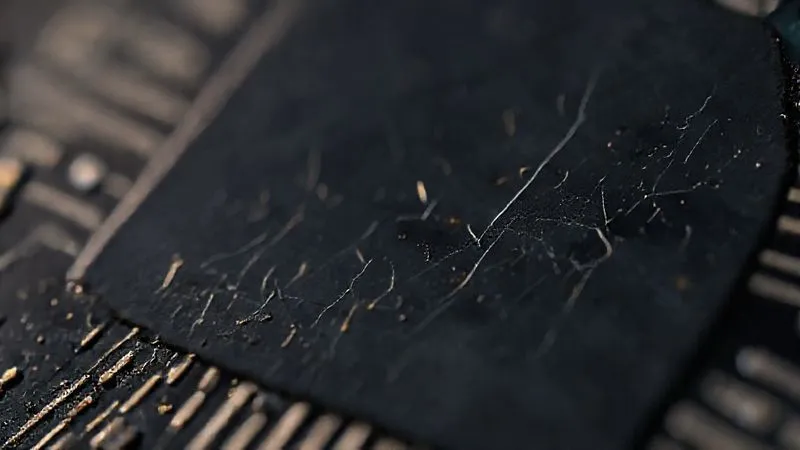
Time takes its toll on everything, and advanced biometric sensors are no exception. Components degrade, materials fatigue, and performance characteristics drift. For instance, the light source in an optical sensor might dim, or the piezoelectric material in an ultrasonic sensor might lose some sensitivity. This physical aging directly impacts the sensor's ability to capture high-fidelity biometric data, making it a prime culprit for long-term accuracy degradation. I've seen organizations overlook this critical factor, leading to a slow, insidious decline in system performance.
Environmental Variables: The Unseen Saboteurs
Beyond the sensor itself, the environment in which it operates plays an enormous, often underestimated, role in its accuracy. I always advise clients to think of the operational environment as an extension of the sensor's design – it must be factored in from day one.
Temperature and Humidity Fluctuations
Extreme or rapidly changing temperatures can cause thermal expansion and contraction in sensor components, altering their optical or electrical properties. High humidity can lead to condensation, short circuits, or material degradation over time. These environmental stressors can induce drift in sensor readings, leading to inconsistent biometric captures. Imagine a fingerprint sensor struggling to get a clear image when the user's finger is cold and dry, or hot and sweaty.
Lighting Conditions (for optical sensors)
Optical biometric sensors, such as those used in facial or iris recognition, are highly dependent on consistent and adequate lighting. Too much light can cause saturation, too little can lead to noise, and inconsistent or uneven lighting can distort features. Shadows, glare, and backlighting are notorious for causing false rejections or even false acceptances, as the system struggles to correctly interpret the biometric pattern.
Dust, Dirt, and Contaminants
Simple physical contaminants are often the most overlooked culprits. A thin film of dust on a camera lens, smudges on a fingerprint scanner, or even a scratch on an iris sensor's protective cover can significantly obscure the biometric features. These seemingly minor issues can drastically reduce the signal-to-noise ratio, making accurate identification a significant challenge. Regular cleaning protocols are not just good practice; they are essential for maintaining accuracy.
| Environmental Factor | Impact on Biometrics | Mitigation Strategy |
|---|---|---|
| Extreme Temperature | Thermal drift, component stress, inconsistent readings | Environmental controls, robust sensor housing |
| High Humidity | Condensation, short circuits, material degradation | Sealed enclosures, desiccant materials |
| Poor Lighting | Feature distortion, saturation/noise, false readings | Controlled lighting, dynamic range sensors, AI enhancement |
| Dust/Dirt | Obscured features, reduced signal-to-noise ratio | Regular cleaning, protective coatings, self-cleaning mechanisms |
Poor Enrollment and User Interaction: The Human Element
Even the most advanced technology can be undermined by inadequate human interaction. In my experience, a significant portion of biometric accuracy issues can be traced back to how users are initially enrolled and how they subsequently interact with the system.
Suboptimal Enrollment Procedures
The quality of the initial biometric template is paramount. If the enrollment process is rushed, poorly explained, or conducted under suboptimal conditions (e.g., bad lighting, incorrect sensor placement), the stored template will be inherently flawed. A low-quality template means that every subsequent authentication attempt starts with a disadvantage, increasing the likelihood of false rejections. I've seen this mistake countless times, where organizations prioritize speed over quality during enrollment, only to pay for it later in user frustration and support tickets.
Inconsistent User Presentation
Users are not machines; their interaction with a biometric sensor can vary. A slight change in angle for a facial scan, a different pressure for a fingerprint, or an altered distance for an iris scan can all impact the quality of the captured data during authentication. While systems are designed to tolerate some variability, significant inconsistencies can push the system beyond its tolerance threshold, leading to accuracy degradation. User training and clear instructions are crucial here.
Physiological Changes and Conditions
The human body is dynamic. Temporary or permanent physiological changes can affect biometric accuracy. Examples include cuts or scars on a fingerprint, changes in facial hair or hairstyle, significant weight fluctuations affecting facial geometry, or even eye conditions impacting iris patterns. While advanced algorithms can adapt to some changes, drastic alterations can lead to a mismatch with the stored template. Understanding these biological realities is key to designing resilient biometric systems.
Expert Insight: "The weakest link in many biometric systems isn't the technology, but the human factor. Invest heavily in user education and a robust, guided enrollment process. It pays dividends in long-term accuracy and user acceptance."
Algorithmic Weaknesses and Data Processing Gaps
While sensors capture the raw data, it's the algorithms that make sense of it. Flaws or limitations in the software processing pipeline can introduce significant accuracy degradation, even with perfect sensor input. This is where the 'advanced' part of advanced biometric sensors truly comes into play – and where it can falter.
Feature Extraction Inaccuracies
After raw biometric data is captured, algorithms must extract unique, identifiable features (e.g., minutiae points in a fingerprint, nodal points in a face). If the feature extraction algorithm is not robust, it might misidentify features, miss subtle details, or extract inconsistent features from slightly varying captures of the same biometric. This directly impacts the quality of the biometric template, making accurate comparisons challenging.
Matching Algorithm Sensitivity
The matching algorithm compares the newly extracted features with the stored template to determine a match. The sensitivity of this algorithm (often controlled by a threshold) is a delicate balance. Too sensitive, and it will reject legitimate users (false rejections). Too lenient, and it might accept imposters (false acceptances). Factors like intra-class variability (natural variations in a person's biometric) and inter-class similarity (how close one person's biometric is to another's) can challenge even the best matching algorithms, leading to accuracy degradation, especially in large populations.
Template Update Strategies
Biometric templates are not static. As a person ages or experiences minor physiological changes, their biometric data can subtly shift. A static, never-updated template will eventually become obsolete, leading to increased false rejections. Effective template update strategies, where the system incrementally updates the stored template with new, high-quality captures, are crucial for long-term accuracy. Without this, the system's 'memory' of the user becomes outdated, a common cause of degradation I've observed in deployed systems.
Security Threats: Spoofing and Presentation Attacks
In the realm of security, accuracy isn't just about matching legitimate users; it's also about rejecting illegitimate ones. The threat of spoofing and presentation attacks (PAs) represents a significant vector for accuracy degradation, blurring the lines between genuine and fraudulent attempts.
The Evolving Landscape of Attack Vectors
As biometric technology advances, so do the methods used to circumvent it. From sophisticated 3D printed masks and deepfake videos for facial recognition to synthetic fingerprints and recorded voice samples, attackers are constantly innovating. A system that was highly accurate against simple spoofing methods a few years ago might be vulnerable today. This constant arms race means that what causes accuracy degradation in advanced biometric sensors often includes the inability to discern genuine live biometrics from cleverly crafted fakes.
Liveness Detection Limitations
Liveness detection (also known as Presentation Attack Detection, PAD) is designed to differentiate between a live human biometric and a presentation attack. This involves analyzing subtle cues like skin texture, blood flow, eye blinking, or voice nuances. However, liveness detection mechanisms have their own limitations. They can be fooled by highly realistic spoofs, or conversely, be overly sensitive and reject legitimate users with unusual presentation styles or conditions. A system struggling with liveness detection will show degraded accuracy, as it fails to correctly classify attempts.
Case Study: BioSecure Inc.'s Anti-Spoofing Breakthrough
Case Study: BioSecure Inc. Reduces False Positives by 40%
BioSecure Inc., a leading provider of access control solutions, faced a critical challenge: their advanced facial recognition system, while accurate for legitimate users, was increasingly susceptible to sophisticated 3D mask attacks. The initial system relied on basic liveness detection, but modern silicon masks were proving too convincing. By implementing a multi-modal liveness detection framework – combining thermal imaging for heat signatures, active depth sensing for true 3D geometry, and AI-driven micro-expression analysis – BioSecure dramatically improved its anti-spoofing capabilities. This resulted in a 40% reduction in false acceptance rates due to presentation attacks, significantly enhancing system integrity and user trust. Their proactive approach to evolving threats directly addressed a major cause of accuracy degradation.
For more insights on biometric security, I often refer to the work done by the National Institute of Standards and Technology (NIST), which provides invaluable guidelines and research on biometric performance and security.
System Integration Complexities and Data Pipeline Issues
Modern biometric systems rarely operate in isolation. They are typically part of a larger ecosystem, integrating with databases, access control systems, and network infrastructure. These integration points introduce new potential vulnerabilities for accuracy degradation.
Interoperability Challenges
Different biometric vendors, hardware, and software platforms may not speak the same language seamlessly. Data formats, communication protocols, and API standards can vary, leading to conversion errors, data loss, or latency issues during transmission. These interoperability challenges can introduce subtle corruptions or delays in the biometric data pipeline, affecting the timeliness and integrity of the information presented to the matching algorithm.
Data Transmission Latency and Loss
In networked biometric systems, data must travel from the sensor to a processing unit or central database. Network congestion, unreliable connections, or inefficient data compression can lead to latency (delays) or even packet loss. For real-time authentication, even a few milliseconds of delay can impact user experience and, more critically, if crucial biometric data packets are lost, the system might have insufficient information for an accurate match, leading to a false rejection.
Scaling and Performance Bottlenecks
As the number of users or transactions increases, the underlying infrastructure must scale. If the database cannot handle the query load, the network becomes saturated, or the processing servers are under-resourced, the entire system can slow down. This can manifest as increased processing times, timeouts, and ultimately, a degradation in the perceived and actual accuracy of the biometric system as it struggles to keep up with demand. Performance issues are often mistaken for accuracy issues, but they are intrinsically linked in user perception.
| Integration Challenge | Impact on Accuracy | Solution |
|---|---|---|
| Data Format Mismatches | Conversion errors, data loss, inconsistent templates | Standardized APIs, robust data mapping, middleware |
| Network Latency | Delayed authentication, timeouts, user frustration | Optimized network infrastructure, edge processing, caching |
| Database Overload | Slow lookups, system unresponsiveness, false rejections | Scalable database architecture, indexing optimization, load balancing |
| Vendor Lock-in | Limited upgrades, poor interoperability, lack of innovation | Open standards, modular architecture, API-first design |
The Critical Role of Calibration and Maintenance
Just like a finely tuned instrument, advanced biometric sensors require regular calibration and maintenance to sustain their peak performance. This is a non-negotiable aspect of preventing accuracy degradation, yet it's often undervalued.
Regular Calibration Protocols
Over time, environmental factors, sensor aging, and even firmware updates can cause a sensor's baseline performance to drift. Calibration involves adjusting the sensor's settings and parameters to ensure its readings are accurate and consistent with established standards. For example, a facial recognition camera might need its white balance or exposure recalibrated, or a fingerprint scanner might need its pressure sensitivity adjusted. Without this periodic 'reset,' the sensor's output will gradually become less reliable, directly contributing to accuracy degradation. I always stress that calibration isn't a one-time event; it's an ongoing commitment.
Proactive Maintenance Schedules
Beyond calibration, physical and software maintenance are crucial. This includes regular cleaning of sensor surfaces, checking for physical damage, updating firmware and software to the latest versions (which often include performance enhancements and bug fixes), and monitoring system logs for anomalies. Proactive maintenance helps catch potential issues before they escalate into significant accuracy problems. It's about preventing the small cracks from becoming major structural failures.
- Establish a Baseline: Document initial sensor performance metrics upon deployment.
- Schedule Routine Checks: Implement a calendar for weekly/monthly visual inspections and basic function tests.
- Develop Calibration Procedures: Create clear, step-by-step guides for technical staff to perform sensor calibration.
- Automate Firmware Updates: Utilize centralized management tools to ensure all sensors run the latest, optimized software.
- Monitor Environmental Factors: Deploy environmental sensors to alert administrators to adverse conditions impacting biometric devices.
- Maintain Cleanliness: Provide clear instructions and tools for regular, appropriate cleaning of sensor surfaces.
For best practices in system maintenance and calibration, industry standards from organizations like IEEE often provide valuable frameworks.
Addressing Degradation: Proactive Strategies for Robust Biometric Systems
Understanding what causes accuracy degradation in advanced biometric sensors is the first step; the next is implementing proactive strategies to combat it. This requires a multi-faceted approach, leveraging the latest advancements in technology and operational best practices.
Implementing Advanced Signal Processing
Modern biometric systems can employ sophisticated signal processing techniques to enhance the quality of raw sensor data. This includes adaptive filtering to reduce noise, image enhancement algorithms to improve contrast and sharpness, and advanced feature normalization to account for variations in presentation. These techniques can effectively 'clean up' imperfect data, giving the matching algorithms a much clearer signal to work with, thereby bolstering overall accuracy.
Machine Learning for Anomaly Detection
Leveraging machine learning (ML) can significantly improve the resilience of biometric systems. ML models can be trained to detect anomalies in sensor data, identify patterns indicative of environmental interference, or even predict sensor degradation before it impacts performance. By continuously monitoring various system parameters, ML can provide early warnings, allowing for proactive intervention and preventing accuracy degradation before it becomes a critical issue. This proactive monitoring is a game-changer.
Continuous Monitoring and Feedback Loops
A truly robust biometric system isn't a 'set it and forget it' solution. It requires continuous monitoring of performance metrics such as False Acceptance Rate (FAR), False Rejection Rate (FRR), and throughput. Establishing feedback loops where system performance data is regularly analyzed allows operators to identify trends, pinpoint causes of degradation, and implement corrective actions. This iterative process of monitoring, analyzing, and optimizing is essential for maintaining high accuracy over the long term. As Harvard Business Review often highlights, effective feedback is crucial for continuous improvement.
Frequently Asked Questions (FAQ)
Q: How often should biometric sensors be calibrated? A: The frequency of calibration depends heavily on the sensor type, its operational environment, and manufacturer recommendations. For high-security or high-traffic applications, monthly or quarterly checks might be necessary. For less critical uses, semi-annual or annual calibration could suffice. Always refer to the specific sensor's documentation and monitor performance for signs of drift.
Q: Can software updates truly improve sensor accuracy, or is it purely hardware-dependent? A: Absolutely, software updates can significantly improve accuracy even without hardware changes. Firmware updates often include optimized algorithms for signal processing, enhanced feature extraction, and more robust matching logic. They can also introduce better noise reduction techniques, improved liveness detection, and adaptive calibration routines, all of which directly impact accuracy.
Q: What role does data security play in preventing accuracy degradation? A: While not a direct cause, poor data security can indirectly lead to accuracy issues. If biometric templates are compromised or tampered with due to security breaches, the system will be comparing live scans against corrupted or altered templates, leading to severe accuracy degradation, including increased false acceptances. Secure storage and transmission of templates are paramount.
Q: Are certain biometric modalities inherently more prone to degradation than others? A: Yes, generally. Modalities highly dependent on external factors like lighting (e.g., facial recognition) or surface contact (e.g., fingerprint) can be more susceptible to environmental degradation or user interaction issues. Internal biometrics like iris or vein patterns, while still affected by some factors, might offer more stability under varied conditions, but they also come with their own unique challenges in capture and processing.
Q: How can I differentiate between a sensor hardware failure and an algorithmic accuracy issue? A: This often requires systematic diagnostics. Hardware failures might present with consistent, severe errors across all users, or total sensor unresponsiveness. Algorithmic issues, however, might show higher False Rejection Rates for specific user groups, increased sensitivity to minor environmental changes, or a gradual decline in accuracy over time without obvious physical damage. Analyzing raw sensor output versus processed features is key to isolating the problem.
Key Takeaways and Final Thoughts
- Hardware is Foundational: Inherent sensor limitations, aging, and noise set the baseline for accuracy.
- Environment is Critical: Temperature, humidity, lighting, and contaminants are silent saboteurs.
- User Interaction Matters: Poor enrollment and inconsistent presentation undermine even the best tech.
- Algorithms are the Brains: Flaws in feature extraction, matching, or template management lead to processing gaps.
- Security is Paramount: Spoofing threats constantly challenge the system's ability to discern genuine intent.
- Proactive Maintenance is Key: Regular calibration and monitoring are essential for sustained performance.
Understanding what causes accuracy degradation in advanced biometric sensors isn't just an academic exercise; it's a critical component of successful deployment and long-term reliability. As an industry veteran, I've seen the pitfalls and the triumphs. By taking a holistic approach – addressing hardware, environmental, human, algorithmic, and security factors – you can build and maintain biometric systems that truly deliver on their promise of accuracy, security, and seamless user experience. The future of secure identity relies on our diligent attention to these details.
Recommended Reading
- 5 Urgent Strategies: Avoid Series B Down Rounds for Tech Startups
- 7 Strategies to Halt Spiraling Cloud Costs During Rapid IT Scaling
- 7 Proven Strategies: How to Mitigate Smart Contract Security Risks in Web3 dApps
- 7 Fixes for High I/O Wait: Solve Your Database Server Woes Now
- Upgrade Immutable Smart Contracts: 5 Strategies Without Data Loss







0 Comentários: