 By
By 
How to get actionable stakeholder feedback on UX prototypes?
For over 15 years in the trenches of UX UI design, I've seen countless brilliant prototype ideas falter, not because the design was flawed, but because the feedback process was broken. It’s a recurring nightmare: you pour your heart into a prototype, present it to stakeholders, and walk away with a notebook full of vague opinions, conflicting demands, or worse – radio silence.
This isn't just frustrating; it's a critical bottleneck that stifles innovation and wastes precious resources. Without clear, actionable feedback, your iterations become educated guesses, and your design process loses its strategic compass. You're left wondering if you're truly solving user problems or just appeasing the loudest voice in the room.
But what if there was a way to consistently transform those nebulous comments into concrete, design-driving insights? In this definitive guide, I'll share the frameworks, strategies, and real-world insights I've honed over years to ensure every feedback session moves your UX prototypes forward. We'll dive into actionable steps, structured approaches, and the psychology behind getting truly valuable input.
Setting the Stage: Pre-Feedback Preparation is Paramount
Before you even think about scheduling a feedback session, remember this: the quality of your input is directly proportional to the quality of your preparation. I've seen this mistake countless times – designers rushing into a session unprepared, hoping stakeholders will magically know what to look for. That's a recipe for disaster.
Define Objectives & Success Metrics
What exactly are you trying to learn from this prototype? Are you validating a specific user flow, testing a new feature concept, or assessing overall usability? Clearly articulate your objectives. For instance, instead of 'get feedback on the new dashboard,' aim for 'validate the discoverability of the new analytics filter and gauge user satisfaction with the data visualization hierarchy.'
Furthermore, define what 'success' looks like for this feedback round. Are you aiming for a consensus on a specific design direction, identification of critical usability issues, or simply gathering initial impressions? Setting these metrics upfront helps you frame your questions and evaluate the feedback received.
Craft a Clear Prototype Scope
Your prototype should have a defined scope. Is it a low-fidelity wireframe focusing on information architecture, or a high-fidelity interactive mock-up showcasing micro-interactions? Clearly communicate what is (and isn't) functional or complete. This manages expectations and prevents stakeholders from fixating on irrelevant details like placeholder text or missing animations.
Select the Right Stakeholders
Who needs to be in the room? Not everyone. Identify key stakeholders whose insights are crucial for the project's success. This typically includes product managers, engineers, marketing leads, and sometimes even sales or customer support. Avoid inviting too many people, which can dilute the feedback and make consensus impossible. Aim for a diverse perspective, but keep the group focused.
Choose the Appropriate Fidelity
The fidelity of your prototype should match your feedback objectives. A low-fidelity prototype is excellent for gathering high-level structural feedback, while a high-fidelity prototype is better for testing detailed interactions and visual design. Presenting a pixel-perfect design too early can lead to superficial feedback on aesthetics rather than functionality.
Expert Insight: "The most valuable feedback isn't about 'likes' or 'dislikes,' but about understanding 'why.' Structure your preparation to unearth those deeper motivations and concerns."
Here's a quick checklist I use for pre-feedback preparation:
- Clear Objectives: What specific questions do I want answered?
- Defined Scope: What aspects of the prototype are ready for feedback?
- Key Stakeholders Identified: Who needs to be there, and why?
- Appropriate Fidelity Chosen: Does the prototype match the feedback goal?
- Pre-circulated Materials: Have stakeholders received any context or tasks beforehand?
- Facilitation Plan: How will I guide the session and capture notes?

Structuring the Feedback Session for Maximum Output
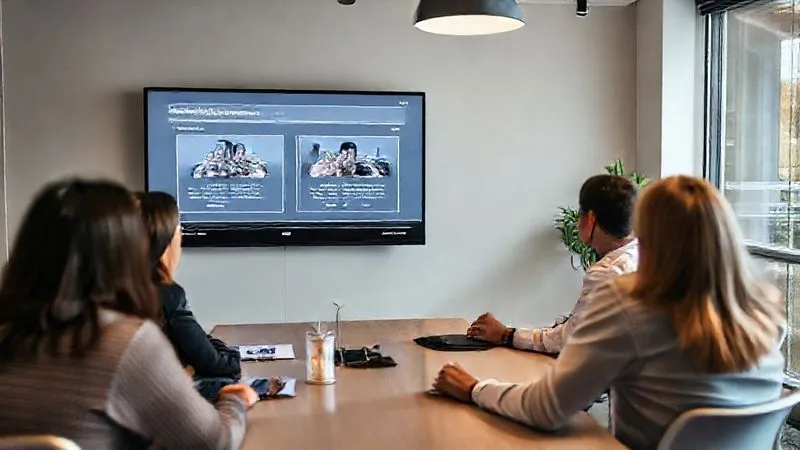
A poorly structured session can derail even the best-prepared prototype. I've learned that guiding the conversation is just as important as the design itself. Without a clear framework, feedback can quickly devolve into a free-for-all of personal preferences.
The Art of the Introduction: Setting Expectations
Begin every session by reiterating the objectives, the prototype's scope, and the type of feedback you're seeking. Emphasize that you're looking for constructive criticism related to user goals and business objectives, not just opinions. For example, 'Today, we're focusing on the clarity of the onboarding flow. I'm less interested in the exact shade of blue and more interested in whether a new user would understand what to do next.'
Guiding the Walkthrough: Focus on User Flows
Don't just click through your prototype aimlessly. Guide stakeholders through specific user flows or scenarios. Ask them to imagine themselves as a user trying to accomplish a task. This helps ground their feedback in a practical context rather than abstract judgment. Narrate the user's journey, highlighting key decision points and interactions.
Strategic Questioning: Open-Ended vs. Directed
The questions you ask dictate the quality of the answers you receive. Start with open-ended questions to encourage broad thoughts, then follow up with more directed questions to dig into specifics. Avoid leading questions that push stakeholders towards a particular answer.
- Start with context: Remind everyone of the session's objectives and the specific areas for feedback.
- Briefly introduce the prototype: Explain its fidelity and what it does/doesn't do.
- Present a specific user task/flow: 'Imagine you're a new user trying to [achieve a goal].'
- Observe and listen: Let stakeholders interact (if applicable) and voice initial thoughts.
- Ask open-ended questions: 'What are your initial impressions?', 'What challenges do you foresee?', 'What's unclear here?'
- Ask directed questions for specifics: 'Does this button clearly indicate its function?', 'Is this information presented logically for [user type]?', 'How does this flow compare to [competitor/previous version]?'
- Capture all feedback: Use a structured method for notes (more on this below).
- Summarize key points: Reiterate what you've heard to ensure accuracy.
| Question Type | Purpose | Example |
|---|---|---|
| Open-Ended | Explore broad perspectives, uncover unknown issues | What are your overall thoughts on this feature? |
| Directed/Specific | Validate specific elements, get concrete suggestions | Does the 'submit' button's placement feel intuitive for this form? |
| Scenario-Based | Gauge usability for specific tasks, identify friction points | If you wanted to change your profile picture, where would you go first? |
| Comparative | Assess against benchmarks, understand preferences | How does this navigation compare to our existing product or a competitor's? |
Mastering the Art of Listening and Observation
Feedback isn't just about what's said; it's also about what's observed and how you interpret it. As a UX professional, your role extends beyond design to becoming a skilled facilitator and empathetic listener.
Active Listening Techniques
Practice active listening by truly focusing on what stakeholders are saying, without formulating your response. Paraphrase their comments to confirm understanding: 'So, if I understand correctly, you're concerned that the current navigation might confuse users who are looking for account settings?' This not only ensures accuracy but also makes stakeholders feel heard and valued.
Observing Non-Verbal Cues
Pay attention to body language, facial expressions, and tone of voice. A stakeholder might say, 'It's fine,' but a furrowed brow or hesitant tone could indicate underlying concerns. These non-verbal cues often reveal more genuine reactions than polite spoken words. Ask follow-up questions to probe these observations gently.
Documenting Feedback Effectively
Don't rely on memory. Use a consistent method for capturing feedback. This could be a spreadsheet, a dedicated feedback tool, or even sticky notes categorized by theme. I often use a simple system: Observation (what was said/done), Interpretation (what I think it means), and Action Item (what needs to be done about it). Assign a severity or priority level to each piece of feedback to aid in later analysis.
Expert Insight: "Empathy isn't just for users; it's for your stakeholders too. Understand their perspective, their goals, and their pressures to unlock more meaningful feedback."

Transforming Raw Feedback into Actionable Insights
This is where the magic happens – converting a jumble of comments into a clear roadmap for design iteration. Receiving feedback is only half the battle; the other half is making sense of it and determining what to act upon.
Categorizing Feedback: Issues, Ideas, Praises
Once you've collected all the feedback, the first step is to categorize it. I typically sort feedback into three buckets: Issues (problems, usability hurdles, pain points), Ideas (suggestions for new features or improvements), and Praises (what's working well). This immediate categorization helps you see patterns and identify critical areas for improvement.
Prioritization Frameworks (e.g., MoSCoW, Impact/Effort Matrix)
Not all feedback is created equal, nor can it all be addressed immediately. Use a prioritization framework to determine what to tackle first. The MoSCoW method (Must-have, Should-have, Could-have, Won't-have) is excellent for feature prioritization. Alternatively, an Impact/Effort Matrix helps you identify high-impact, low-effort changes that can deliver quick wins. In my experience, focusing on critical issues that align with project objectives and user needs always takes precedence.
The "Why" Behind the "What": Digging Deeper
When stakeholders suggest a solution ('Make the button bigger!'), always ask 'Why?' or 'What problem are you trying to solve with that?' Often, their proposed solution might not be the best one, but their underlying concern is valid. By uncovering the root cause, you can design a more elegant and effective solution. As experts at Harvard Business Review suggest, "The most effective feedback provides not just information, but also a path forward." You can explore more about effective feedback strategies here.
Case Study: How Acme Corp Transformed Its Internal Tool
Acme Corp, a mid-sized B2B SaaS company, was struggling with low adoption rates for a critical internal CRM tool. Initial feedback sessions were chaotic, yielding vague complaints like 'it's hard to use' or 'I don't like it.' By implementing a structured feedback process – defining clear objectives (improve task completion time for sales reps), guiding sessions with specific user flows, and rigorously categorizing and prioritizing feedback – their UX team uncovered a critical issue: the reporting module was unintuitive and required too many clicks.
Instead of just making buttons bigger, they redesigned the reporting dashboard based on user task flows identified through the feedback. This resulted in a 25% reduction in task completion time for sales reps and a 40% increase in reporting module usage within three months. The actionable feedback wasn't just about surface-level changes; it was about understanding the underlying struggle and designing a solution that genuinely improved efficiency.
Closing the Loop: Communication and Iteration
Receiving feedback is a dialogue, not a monologue. The feedback loop isn't closed until stakeholders understand how their input has (or hasn't) influenced the design. This builds trust and encourages continued engagement.
Summarizing and Confirming Understanding
After each session, send a concise summary of the key feedback points you heard and your initial plan for addressing them. This confirms your understanding and allows stakeholders to correct any misinterpretations. It also demonstrates that you've listened and valued their time.
Communicating Design Decisions
Once you've iterated on the prototype, communicate the changes made and, crucially, *why* those changes were implemented. If certain feedback couldn't be addressed (due to scope, technical limitations, or conflicting priorities), explain your rationale respectfully. Transparency is key to maintaining stakeholder trust and ensuring they continue to provide candid feedback in the future.
Iterating with Purpose
Every iteration should be driven by actionable feedback and a clear objective. Avoid making changes just for the sake of it. Each design decision should trace back to a specific piece of feedback or a validated user need. This focused iteration ensures that your design evolves strategically, moving closer to a validated solution with each cycle.
Overcoming Common Feedback Challenges
Even with the best preparation, you'll encounter challenges. Knowing how to navigate them is a hallmark of an experienced UX professional.
Dealing with Conflicting Feedback
This is perhaps the most common challenge. When two stakeholders offer opposing views, don't play favorites. Instead, revisit your objectives. Which piece of feedback better aligns with user needs and business goals? Can you synthesize both perspectives into a third, improved solution? Sometimes, the answer lies in further user testing to validate one perspective over another. Remember, your job is to advocate for the user and the project's success, not just to appease individual opinions.
Managing Scope Creep
Stakeholder feedback, while valuable, can sometimes lead to requests that fall outside the current project scope. Politely but firmly refer back to the defined objectives and scope. Acknowledge the idea, perhaps log it for a future phase, but explain why it cannot be incorporated into the current iteration. This requires a delicate balance of receptiveness and boundary-setting.
Educating Stakeholders on UX Principles
Many stakeholders, while experts in their own domains, may not fully grasp UX principles. When feedback leans towards personal preference ('I just don't like blue'), gently educate them on the underlying UX rationale. Explain how certain design choices impact usability, accessibility, or conversion rates. Share relevant data or best practices to support your design decisions. The Nielsen Norman Group offers excellent resources on educating stakeholders about UX.
Leveraging Tools and Technology for Efficient Feedback
In today's fast-paced design environment, leveraging the right tools can significantly streamline the feedback process, making it more efficient and organized.
Prototype Tools with Built-in Feedback Features
Many modern prototyping tools like Figma, Adobe XD, and InVision offer robust features for collecting feedback directly within the prototype. Stakeholders can leave comments linked to specific screen elements, facilitating clear communication and reducing ambiguity. These tools often allow for asynchronous feedback, accommodating different schedules.
Collaboration Platforms
For broader discussions and documentation, collaboration platforms like Slack, Microsoft Teams, or dedicated project management tools (Jira, Asana) can be invaluable. They provide a centralized place for discussions, decision logs, and tracking action items related to feedback. As Forbes highlights, effective collaboration tools are crucial for improving team communication and productivity.
Measuring the Impact of Actionable Feedback
The true value of actionable feedback is its impact on the final product and its users. Don't just collect and implement; measure the results.
Quantifying Improvements
Did the changes based on feedback lead to measurable improvements? Track metrics like task completion time, error rates, user satisfaction scores (e.g., SUS, NPS), and conversion rates. Presenting these quantifiable results to stakeholders demonstrates the direct value of their input and reinforces the importance of the feedback process.
Long-Term Stakeholder Trust
Consistently demonstrating that you listen, act thoughtfully on feedback, and communicate the outcomes builds immense trust. Trusted stakeholders are more likely to invest their time and provide candid, constructive input, creating a virtuous cycle of continuous improvement.
Expert Insight: "The most effective UX teams don't just ask for feedback; they actively teach their stakeholders how to give it, turning critics into collaborators."

| Tool Category | Key Benefit | Example Tools |
|---|---|---|
| Prototyping & Feedback | Contextual comments, direct annotation | Figma, Adobe XD, InVision |
| Project Management | Track tasks, manage action items, timeline visibility | Jira, Asana, Trello |
| Communication & Collaboration | Real-time discussion, file sharing, decision logging | Slack, Microsoft Teams, Google Workspace |
Frequently Asked Questions (FAQ)
How do I handle a dominant stakeholder who monopolizes the conversation? I've found that setting ground rules at the beginning of the session, emphasizing equal participation, is crucial. During the session, you might gently interject by saying, "Thank you for that insight, [Stakeholder's Name]. Let's hear from [Another Stakeholder's Name] now to ensure we capture everyone's perspective." You can also use methods like round-robin feedback to ensure each person gets dedicated time to speak.
What if stakeholders give conflicting feedback? How do I decide what to prioritize? Conflicting feedback is common. When this happens, revisit your project objectives and user research. Which piece of feedback aligns more closely with solving a critical user problem or achieving a key business goal? If it's still unclear, consider setting up a small A/B test or conducting targeted user interviews to validate one approach over the other. The goal isn't to please everyone, but to make the best decision for the product and its users.
How much time should I allocate for a feedback session? The ideal length depends on the complexity of the prototype and the number of stakeholders. For a focused review of a specific flow, 30-60 minutes might suffice. For a broader prototype review with multiple sections, 90 minutes to 2 hours might be necessary. Always build in a buffer for discussion and Q&A. Avoid sessions longer than 2 hours to prevent fatigue and maintain focus.
Should I always implement all feedback I receive? Absolutely not. Your role as a UX designer is to be a curator and interpreter of feedback, not just an order-taker. Evaluate each piece of feedback against your project objectives, user research, technical feasibility, and overall design principles. Some feedback might be out of scope, based on personal preference, or contradict established best practices. It's essential to explain your rationale when you decide not to implement certain suggestions.
What's the best way to present a prototype to ensure engagement? Beyond setting the stage and guiding the walkthrough, make the presentation interactive. If possible, let stakeholders click through the prototype themselves, or ask them to narrate their thoughts as you navigate. Use a conversational tone, encourage questions throughout, and avoid simply lecturing about the design. Frame it as a collaborative exploration rather than a formal presentation.
Key Takeaways and Final Thoughts
Getting actionable stakeholder feedback on UX prototypes isn't a mystical art; it's a skill built on careful preparation, structured facilitation, empathetic listening, and strategic analysis. It’s about transforming vague opinions into concrete insights that propel your designs forward.
- Preparation is Power: Define objectives, scope, and select the right stakeholders.
- Structure for Success: Guide sessions with clear intros, user flows, and strategic questions.
- Listen Actively: Pay attention to both verbal and non-verbal cues, and document thoroughly.
- Transform & Prioritize: Categorize feedback and use frameworks to identify what to act on.
- Close the Loop: Communicate decisions transparently to build trust and encourage future engagement.
- Leverage Tools: Utilize modern prototyping and collaboration tools to streamline the process.
By embracing these principles, you'll move beyond simply 'getting feedback' to truly mastering the art of collaborative design. You'll not only create better products but also foster stronger relationships with your stakeholders, cementing your role as a strategic partner in product development. Go forth, design with confidence, and transform those prototypes into exceptional user experiences!
Recommended Reading
- Cracking the Code: How to Interpret Inconclusive A/B Test Results in UX Design?
- 5 Critical Strategies: How to Prevent Unauthorized Access to Industrial IoT Sensor Data?
- Scale Smoothly: 5 Ways to Prevent Infrastructure Bottlenecks in Startups
- 7 Proven Strategies: Reducing CI/CD Pipeline Failures from Configuration Drift
- Unlock Innovation: How to Start an Open Source Software Initiative Today!







0 Comentários: