 By
By 
Optimizing IoT Sensor Battery Life for 5-Year Remote Deployments?
For over 18 years in the Internet of Things space, I've witnessed countless ambitious remote deployments falter, not due to a lack of innovative sensor technology or robust cloud platforms, but because of a single, often overlooked constraint: battery life. The promise of ubiquitous, long-term monitoring in inaccessible locations crumbles when sensors demand costly, frequent battery replacements.
The pain of dispatching technicians to remote sites, battling harsh weather, and incurring significant operational expenses just to swap out a depleted battery is a scenario I've seen play out too many times. It's not just an inconvenience; it's a fundamental threat to the economic viability and scalability of an IoT project, especially when the goal is a truly autonomous 5-year operational window.
This article isn't just a collection of tips; it's a comprehensive framework built on years of hands-on experience and deep dives into the latest low-power innovations. I'll guide you through actionable strategies, from hardware selection and software wizardry to advanced power management and network protocols, ensuring your IoT sensors don't just survive but thrive for five years or more in the field. Let's unlock the secrets to truly enduring IoT deployments.
Understanding the Core Challenge: The Energy Budget
Before we dive into solutions for optimizing IoT sensor battery life for 5-year remote deployments, we must first grasp the fundamental challenge: the energy budget. Every millijoule counts when you're aiming for multi-year autonomy. It’s a constant tug-of-war between desired functionality and available power, often dictated by the size and cost constraints of your device.
The Physics of Power Consumption
At its heart, battery life is governed by two factors: the battery's capacity (measured in milliamp-hours, mAh) and the device's average current draw (in milliamps, mA, or microamps, µA). A simple calculation of Capacity / Average Current Draw = Hours of Operation gives you a baseline. However, IoT devices rarely draw constant current; they cycle through active, idle, and deep sleep states, each with vastly different power profiles.
The key insight here is that the vast majority of power is consumed during active states, particularly during data acquisition, processing, and transmission. Deep sleep modes, while crucial, only provide minimal savings if the active periods are not aggressively minimized. Understanding the current draw of each component – MCU, sensor, radio – in every operational state is the first step to effective power management.
"Achieving multi-year battery life isn't about finding a bigger battery; it's about making every electron perform its duty with unparalleled efficiency. It's a design philosophy, not just a component choice."
Choosing the Right Hardware: Foundation for Longevity
The journey to optimizing IoT sensor battery life for 5-year remote deployments begins with foundational hardware choices. You can't software-optimize your way out of inefficient components. Selecting power-efficient microcontrollers, sensors, and communication modules is paramount.
Ultra-Low Power Microcontrollers (MCUs)
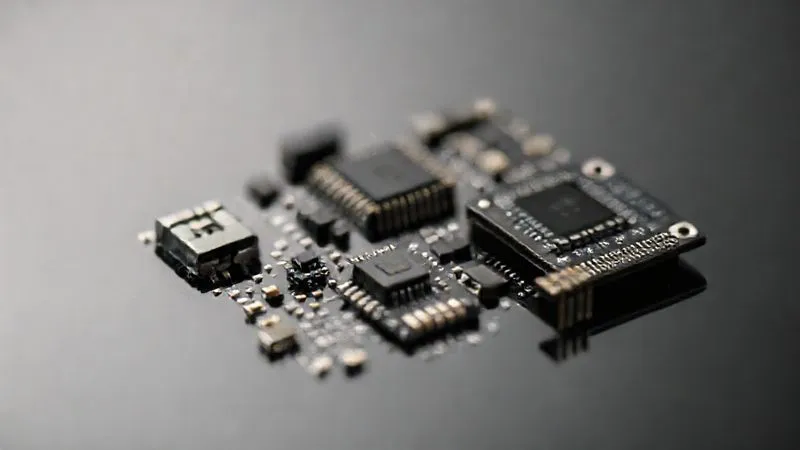
The MCU is the brain of your IoT device, and its power profile significantly impacts overall consumption. Modern ultra-low power (ULP) MCUs from vendors like Silicon Labs, STMicroelectronics, and Texas Instruments are designed with sophisticated power modes. Look for MCUs with extremely low current draw in deep sleep (often in the single-digit microamps or even nanoamps) and efficient active modes.
Features like integrated DC-DC converters, autonomous peripherals (which can operate without the CPU being fully awake), and fast wake-up times are critical. The faster your MCU can wake up, perform its task, and return to sleep, the less energy it consumes in its high-power state. This speed-to-sleep strategy is a cornerstone of ULP design.
Sensor Selection: Efficiency First
Sensors themselves can be significant power hogs. Active sensors, which require continuous power to operate, will drain your battery much faster than passive sensors or those with low-power standby modes. When selecting sensors, prioritize those designed for low power consumption, often indicated by their current draw in active and sleep states.
Consider MEMS (Micro-Electro-Mechanical Systems) sensors, which are inherently more power-efficient than older, bulkier counterparts. Also, evaluate the sensor's warm-up time; a sensor that takes seconds to stabilize will consume more power than one that's ready in milliseconds, especially if you're duty cycling frequently.
Radio Module & Communication Protocols
The radio module is typically the hungriest component. Its power consumption depends heavily on the chosen communication protocol. For remote, low-data-rate deployments aiming for 5-year battery life, traditional Wi-Fi or cellular (4G/5G) are often non-starters due to their high power demands.
Instead, focus on Low-Power Wide-Area Network (LPWAN) technologies like LoRaWAN or NB-IoT. These protocols are specifically designed for long-range, low-power communication with infrequent data transmission. Bluetooth Low Energy (BLE 5.x) can also be viable for shorter-range, low-duty-cycle applications, especially with its extended advertising and sleep features.
Mastering Software Optimization: The Invisible Power Saver
Once you've selected efficient hardware, the next critical layer for optimizing IoT sensor battery life for 5-year remote deployments lies in intelligent software design. Software optimization can often yield more significant battery life improvements than hardware alone, turning a 1-year device into a 5-year marvel.
Duty Cycling and Sleep Modes: The Non-Negotiable Strategy
This is arguably the single most impactful strategy. Your device should spend as much time as possible in its deepest sleep state. Active periods should be as short and efficient as possible. Here’s an actionable approach:
- Define Measurement Frequency: Determine the absolute minimum frequency needed for data collection (e.g., once an hour, once a day).
- Wake-Up Trigger: Use a low-power timer to wake the MCU from deep sleep. Avoid continuous polling.
- Rapid Task Execution: Upon waking, quickly power up necessary peripherals, acquire sensor data, process it minimally, and prepare for transmission.
- Efficient Transmission: Transmit data in a burst, using the lowest possible power settings for the radio (e.g., appropriate LoRaWAN spreading factor or NB-IoT power saving mode).
- Immediate Sleep: As soon as data is sent and confirmed, power down all non-essential components and return to the deepest possible sleep state.
Event-Driven Architectures vs. Polling
Avoid continuous polling of sensors or external events. Instead, design your system to be event-driven. Use hardware interrupts to wake the MCU only when a specific event occurs (e.g., a change in a monitored parameter exceeding a threshold, or a movement detection). This drastically reduces unnecessary active time compared to constantly checking for changes.
Data Transmission Efficiency: Less is More
Every byte transmitted costs energy. Therefore, minimize your data payload. Techniques include:
- Data Compression: Apply simple compression algorithms if your data patterns allow.
- Payload Optimization: Use binary formats instead of verbose JSON or XML. Pack multiple data points into a single message.
- Threshold-Based Transmission: Only transmit data when it changes significantly or crosses a predefined threshold, rather than sending the same value repeatedly.
- Edge Processing: Perform as much data processing and aggregation on the device itself (at the 'edge') before transmission. This reduces the amount of raw data sent to the cloud.
"Software isn't just about functionality; it's the conductor of your device's energy orchestra. A well-tuned application can make a mediocre hardware design perform like a champion in power efficiency."
Power Source Innovation: Beyond Standard Batteries
While software and hardware optimization are crucial, the choice of power source itself is fundamental to optimizing IoT sensor battery life for 5-year remote deployments. Traditional alkaline batteries simply won't cut it for these extended durations. You need robust, high-capacity solutions, potentially augmented by energy harvesting.
Primary Cells: Lithium Thionyl Chloride (Li-SOCl2)
For truly remote, unattended deployments, Lithium Thionyl Chloride (Li-SOCl2) batteries are often the gold standard. They offer:
- Highest Energy Density: Per unit volume, they store more energy than most other primary (non-rechargeable) battery types.
- Long Shelf Life: Extremely low self-discharge rates (often less than 1% per year), meaning they retain charge for many years when not in use.
- Wide Operating Temperature Range: Excellent performance in extreme cold (-60°C) and heat (+85°C), which is vital for outdoor deployments.
- Stable Voltage Output: They maintain a relatively constant voltage throughout their discharge cycle, simplifying power management circuitry.
However, they are non-rechargeable, have a relatively high initial cost, and require careful handling due to their chemistry.
Rechargeable Options with Energy Harvesting
When environmental conditions permit, combining rechargeable batteries (like LiFePO4 or specialized Li-ion cells) with energy harvesting can provide virtually infinite device life, eliminating battery replacement entirely. Common harvesting methods include:
- Solar Power: The most prevalent for outdoor applications. Even small, efficient solar panels can trickle-charge a battery, especially when paired with intelligent Maximum Power Point Tracking (MPPT) chargers.
- Vibration Harvesting: Converts ambient vibrations into electrical energy, suitable for devices attached to machinery or infrastructure.
- Thermal Gradient Harvesting: Utilizes temperature differences (e.g., between a hot pipe and ambient air) to generate power, often using thermoelectric generators (TEGs).
The success of energy harvesting relies on consistent availability of the energy source and careful sizing of the harvester and battery to meet peak load requirements and survive periods of no harvesting (e.g., night for solar).
Case Study: EcoSense's Solar-Augmented Deployment
EcoSense, an environmental monitoring startup, faced the challenge of tracking air quality in remote forest regions for 5 years. Initial designs using Li-SOCl2 batteries showed a 3-year lifespan due to frequent data transmissions. By integrating a small, highly efficient amorphous silicon solar panel and a 10Ah LiFePO4 battery, coupled with aggressive duty cycling (data transmission only twice a day), they extended the operational life indefinitely. The solar panel continuously trickle-charged the battery, ensuring resilience even during prolonged cloudy periods. This strategic shift reduced their TCO by 60% over the project's lifetime by eliminating manual battery swaps.
| Battery Type | Energy Density (Wh/kg) | Self-Discharge (per year) | Temp Range (°C) | Typical IoT Use |
|---|---|---|---|---|
| Alkaline (AA) | ~100 | ~5% | -10 to 50 | Short-term, non-critical |
| Li-ion (18650) | ~250 | ~2-3% | -20 to 60 | Rechargeable, moderate power |
| LiFePO4 (LFP) | ~120 | ~1% | -30 to 70 | Rechargeable, harsh env, solar |
| Li-SOCl2 (Primary) | ~500 | <1% | -60 to 85 | Long-term, remote, primary |
Network Protocol & Data Management Strategies
The choice and configuration of your communication protocol are pivotal for optimizing IoT sensor battery life for 5-year remote deployments. Even with efficient hardware and software, a poorly managed network connection can quickly drain your power reserves.
Optimizing LoRaWAN & NB-IoT Parameters
LPWAN technologies like LoRaWAN and NB-IoT offer significant power savings, but only if configured correctly. For LoRaWAN, understanding and utilizing Adaptive Data Rate (ADR) is crucial. ADR allows the network server to optimize the device's spreading factor and transmit power, ensuring the minimum necessary power is used for reliable communication. Manually setting a high spreading factor (e.g., SF12) for long range might seem appealing, but it significantly increases airtime and thus power consumption.
For NB-IoT, leverage Power Saving Mode (PSM) and Extended Discontinuous Reception (eDRX). PSM allows the device to enter a deep sleep for extended periods, only waking to check for downlink messages at predefined intervals. eDRX offers a less aggressive but still beneficial power-saving mode, reducing the frequency of listening for network pages. Properly configuring these parameters in coordination with your network provider can yield massive battery life extensions.
Edge Computing: Processing Data Locally
As I mentioned earlier, transmitting data is costly. By implementing basic edge computing capabilities, you can significantly reduce the amount of data sent over the network. Instead of sending raw sensor readings every minute, the device can process the data locally, calculate averages, detect anomalies, or filter out redundant information, and only transmit summaries or alerts when necessary. This moves the computational load from the cloud to the device, but more importantly, it minimizes the energy-intensive radio transmissions.
Data Aggregation and Batching
Sending many small packets of data is less efficient than sending one larger packet. Aggregate data over a period (e.g., an hour or a day) and send it as a single burst. This reduces the overhead associated with establishing and tearing down network connections for each transmission. While this introduces latency, for many remote monitoring applications (like environmental sensors), a slight delay in data availability is an acceptable trade-off for multi-year battery life.
Deployment Environment & Physical Considerations
The physical environment where your IoT sensors are deployed plays a surprisingly large role in optimizing IoT sensor battery life for 5-year remote deployments. Overlooking these factors can negate all your careful hardware and software optimizations.
Temperature Extremes and Battery Performance
Batteries are highly sensitive to temperature. Extreme cold significantly reduces battery capacity and voltage output, while extreme heat can accelerate degradation and self-discharge. When planning deployments in environments with wide temperature fluctuations (e.g., deserts, arctic regions), select batteries specifically rated for those conditions (like Li-SOCl2 as discussed) and consider thermal management strategies for your device enclosure.
Insulating the device can help maintain a more stable internal temperature, protecting the battery. For solar-powered devices, ensure the solar panel is not prone to overheating, which can reduce its efficiency and potentially damage the battery charger circuitry.
Antenna Placement & Signal Strength
Poor antenna placement or weak signal strength forces the radio module to transmit at higher power levels or retransmit data multiple times, both of which consume excessive energy. Always conduct a site survey to assess signal strength before deployment. Position antennas optimally, ensuring they are not obstructed by metal objects, dense foliage, or the ground itself. Using external, high-gain antennas can improve signal quality and allow the device to transmit at lower power, thereby saving battery life.
Protective Enclosures for Thermal Management
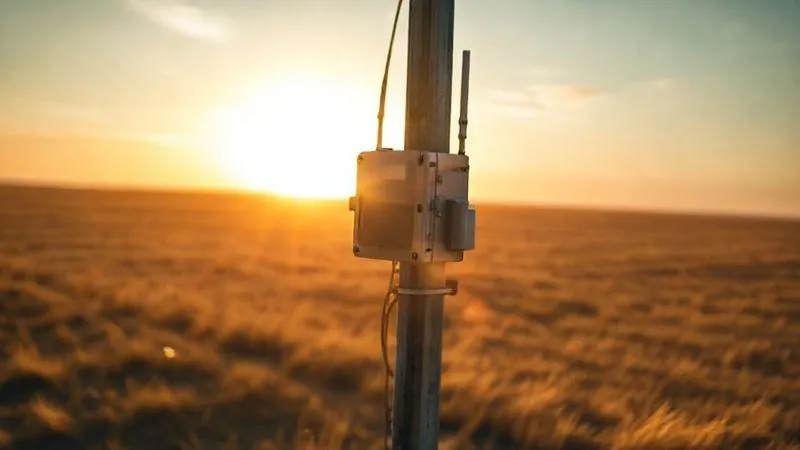
The device enclosure does more than just protect against physical damage and ingress. It's a critical component for thermal management. A well-designed enclosure can shield the battery and electronics from direct sunlight (preventing overheating) or insulate them from extreme cold. Materials, color (reflective vs. absorptive), and ventilation (or lack thereof for insulation) all play a role. Remember, a battery operating within its optimal temperature range will always perform better and last longer.
Advanced Techniques: Predictive Analytics and Adaptive Behavior
For those truly committed to pushing the boundaries of optimizing IoT sensor battery life for 5-year remote deployments, advanced techniques leveraging data and machine learning offer exciting possibilities. These methods allow your devices to become 'smarter' about their power usage.
Machine Learning for Anomaly Detection & Adaptive Sampling
Instead of fixed sampling rates, imagine sensors that intelligently adapt. Machine learning algorithms, either on the edge or in the cloud, can analyze historical data to identify patterns and predict future events. For example, an environmental sensor might increase its sampling rate only when it detects an unusual spike in a pollutant, returning to a low-power, infrequent sampling mode during stable periods.
Anomaly detection can also optimize maintenance. By monitoring battery voltage and internal resistance, ML models can predict battery failure before it happens, allowing for proactive, scheduled maintenance rather than reactive, emergency dispatches. This extends the effective lifespan of the deployment by ensuring timely interventions.
Firmware Over-The-Air (FOTA) Updates for Ongoing Optimization
The ability to update firmware remotely (FOTA) is not just for fixing bugs or adding features; it's a powerful tool for continuous power optimization. As you gather real-world data on device performance and environmental conditions, you can push optimized duty cycles, improved radio power settings, or more efficient sensor reading routines to your deployed devices. This ensures that your devices can adapt and improve their power consumption throughout their 5-year lifecycle, rather than being stuck with their initial, potentially suboptimal, configuration.
"The future of ultra-long-life IoT deployments isn't just about static efficiency; it's about dynamic adaptability. Smart devices will learn to conserve energy, extending their mission far beyond initial expectations."
The Total Cost of Ownership (TCO) Perspective
When considering optimizing IoT sensor battery life for 5-year remote deployments, it’s crucial to look beyond the initial component cost and evaluate the Total Cost of Ownership (TCO). A cheaper battery or less efficient hardware might seem appealing upfront, but the long-term operational expenses can quickly erode any initial savings.
Initial Investment vs. Long-Term Savings
Investing in higher-quality, ultra-low power components, robust batteries like Li-SOCl2, or even an energy harvesting setup, will undoubtedly increase your initial capital expenditure. However, these investments pay dividends over a 5-year (or longer) deployment period by drastically reducing or eliminating battery replacement costs, which include:
- Technician labor and travel time to remote sites.
- Logistics for new batteries and disposal of old ones.
- Downtime and lost data during battery failure.
- Reputational damage from unreliable deployments.
A comprehensive TCO analysis will reveal that the slightly higher upfront cost for longevity-focused design is almost always justified for remote, long-term IoT projects.
Maintenance Costs and ROI
For critical infrastructure monitoring, environmental sensing, or agricultural applications, the cost of a failed sensor due to battery depletion can be immense, far outweighing the cost of a premium battery. Moreover, predictable battery life allows for planned maintenance cycles, where technicians can service multiple devices in one trip, rather than making emergency visits. This dramatically improves operational efficiency and return on investment (ROI).
As a recent Deloitte study highlighted, companies that prioritize long-term reliability and lower operational expenditure in their IoT strategies consistently achieve higher ROI and greater business impact. This underscores the strategic importance of battery life optimization.
| Scenario | Initial Hardware Cost | Battery Replacements (5 years) | Replacement Cost (per unit, incl. labor) | Total 5-Year Cost |
|---|---|---|---|---|
| Low-Cost Initial Design (1-year battery) | $50 | 4 | $100 | $450 |
| Optimized Design (5-year battery) | $80 | 0 | $0 | $80 |
| Solar-Augmented Design (Indefinite) | $150 | 0 | $0 | $150 |
Frequently Asked Questions (FAQ)
How much battery life can I realistically expect from a LoRaWAN device with a 10Ah Li-SOCl2 battery? Realistically, with aggressive duty cycling (e.g., sending 10 bytes every hour) and optimal settings, you can expect 7-10 years or even more. Factors like signal strength, temperature extremes, and the specific MCU/sensor combination will influence this, but 5 years is very achievable. Always perform detailed power profiling for your specific application.
Is energy harvesting viable for all remote IoT deployments? No, it's not a universal solution. Energy harvesting requires a consistent and sufficient energy source (e.g., ample sunlight, significant vibration, stable thermal gradients). For truly dark, static, or thermally stable environments, primary batteries like Li-SOCl2 remain the most reliable choice. It's crucial to assess the environmental conditions rigorously before committing to an energy harvesting solution.
What's the biggest mistake companies make regarding IoT battery life? The biggest mistake I've seen is underestimating the complexity of power management and treating battery life as an afterthought. Many focus solely on initial hardware cost, neglecting the far greater operational expenses of frequent battery replacements. Another common error is failing to thoroughly profile power consumption across all operational states during development.
How important is edge computing for battery optimization? Extremely important. Edge computing directly reduces the most power-hungry activity: data transmission. By processing data locally and only sending critical, aggregated, or anomaly-driven information, you can achieve significant battery life extensions, often turning a device that transmits frequently into one that transmits sparingly.
Can I upgrade existing deployments for better battery life? It depends on the hardware. If the existing devices support Firmware Over-The-Air (FOTA) updates, you can implement software-based optimizations like improved duty cycling, better data aggregation, and optimized network parameters. However, if the core hardware (MCU, radio, sensors) is inherently inefficient, significant improvements might be limited without a hardware refresh. For non-rechargeable devices, replacing the battery with a higher capacity, suitable chemistry option might also be an option, but this still incurs a site visit cost.
Key Takeaways and Final Thoughts
Optimizing IoT sensor battery life for 5-year remote deployments is not a single silver bullet, but rather a multi-faceted engineering challenge that demands a holistic approach. From the very first design decision to the ongoing management of deployed devices, every choice impacts your power budget and, ultimately, your project's success.
- Prioritize Ultra-Low Power Hardware: Select MCUs, sensors, and radio modules designed for extreme efficiency.
- Master Software Optimization: Aggressive duty cycling, deep sleep modes, and efficient data handling are non-negotiable.
- Choose the Right Power Source: Li-SOCl2 for primary power, or intelligent energy harvesting for indefinite life where feasible.
- Optimize Network Protocols: Leverage features like LoRaWAN's ADR and NB-IoT's PSM/eDRX.
- Consider the Environment: Account for temperature extremes and ensure optimal antenna placement.
- Embrace Advanced Techniques: Predictive analytics and FOTA updates enable continuous improvement.
- Think TCO: View battery life as a critical factor in your overall project economics, not just a technical spec.
The journey to truly autonomous, long-term IoT deployments is challenging, but immensely rewarding. By diligently applying these strategies, you're not just extending battery life; you're building a more reliable, sustainable, and economically viable IoT ecosystem. The future of remote monitoring is here, and it's powered by intelligent design. Go forth and deploy with confidence!
Recommended Reading
- Remote Live Video: 5 Strategies to Crush Latency & Deliver Flawless Streams
- 7 Reasons Your Pro Video Colors Shift Across Displays (And How To Fix It)
- Stop Cloud Spend Overruns: 6 Strategies for Cost Optimization
- The Ultimate Guide: How to Ace Tech VC Due Diligence & Secure Your Funding
- Unlock Executive Action: 7 Ways to Simplify Complex Data Insights




0 Comentários: