 By
By 
How to Diagnose Intermittent Sensor Data Loss in Industrial Robots?
For over two decades in the trenches of robotics automation, I've witnessed firsthand the profound frustration caused by intermittent sensor data loss in industrial robots. It's the phantom menace of the factory floor – an issue that appears, disappears, and leaves engineers scratching their heads, often leading to costly downtime and lost productivity.
This isn't just a minor glitch; it's a critical operational bottleneck. Unreliable sensor data can lead to production errors, compromised product quality, increased scrap rates, and, in severe cases, even safety hazards. The unpredictability of these failures makes them particularly insidious, undermining trust in automation systems and eating into profitability.
In this definitive guide, I'll draw upon my extensive experience to provide you with a systematic, expert-level framework to diagnose intermittent sensor data loss in industrial robots. We'll move beyond guesswork, equipping you with actionable steps, diagnostic methodologies, and advanced troubleshooting techniques to pinpoint and rectify these elusive problems, ensuring your robots perform with unwavering precision.
Understanding the Elusive Nature of Intermittent Sensor Failures
Before we dive into solutions, it’s crucial to grasp why intermittent sensor data loss is so challenging. Unlike a hard failure, where a component simply stops working, intermittent issues are sporadic, context-dependent, and often defy simple replication.
The Challenge of Sporadic Symptoms
Sporadic symptoms are the hallmark of intermittent failures. One moment, your robot operates flawlessly, and the next, it's reporting erroneous positions, missing object detections, or stalled cycles due to a sudden data dropout. These occurrences might be triggered by specific environmental conditions, load changes, or even the subtle vibrations of nearby machinery.
The difficulty lies in the 'now you see it, now you don't' nature, making it hard to isolate the root cause. This often leads to unnecessary component swaps, wasted time, and prolonged troubleshooting efforts that fail to address the underlying problem.
Common Causes: A High-Level Overview
Intermittent sensor data loss typically stems from a confluence of factors rather than a single point of failure. From my observations, these usually fall into electrical, mechanical, software, or environmental categories.
- Electrical Issues: Loose connections, faulty wiring, electromagnetic interference (EMI), power supply fluctuations, or ground loops.
- Mechanical Stress: Cable fatigue, vibration-induced connector wear, sensor misalignment, or physical damage that only manifests under specific robot movements.
- Software Glitches: Corrupted drivers, incorrect sensor configuration, timing issues in the controller logic, or communication protocol errors.
- Environmental Factors: Extreme temperature changes, humidity, dust, or corrosive agents affecting sensor performance or cable integrity.
Phase 1: Systematic Data Collection and Observational Diagnostics
The first and most critical step in diagnosing intermittent sensor data loss is meticulous data collection. Without reliable information, you're merely guessing. This phase focuses on gathering quantitative and qualitative data.
Logging and Trend Analysis
Modern industrial robots and their controllers offer extensive logging capabilities. Leveraging these is paramount. You need to capture not just the error events, but also the conditions leading up to them.
- Activate Comprehensive Logging: Ensure your robot controller's diagnostic logs are set to their highest detail level. Log sensor values, robot joint positions, cycle times, error codes, and system alarms.
- Timestamp Everything: Precise timestamps are crucial for correlating events. Look for patterns in when the data loss occurs (e.g., always at a specific point in the robot's cycle, at certain times of day, or after a specific number of operations).
- Trend Analysis: Use the logged data to visualize sensor readings over time. Look for sudden drops, spikes, or gradual deviations from expected values. Software tools can help you graph these trends, making anomalies easier to spot.
- Environmental Monitoring: If possible, log environmental data such as ambient temperature, humidity, and vibration levels concurrently with robot data.
I've often found that a quick review of historical data can immediately narrow down the possibilities, saving hours of unnecessary troubleshooting.
| Parameter | Expected Range | Tolerance |
|---|---|---|
| Sensor Value (Current) | 0-10V | +/- 0.1V |
| Robot Joint Position (J1) | -180 to 180 deg | +/- 0.5 deg |
| Cycle Time | 10-12s | +/- 0.5s |
| Ambient Temperature | 20-25°C | +/- 2°C |
Visual Inspection: The Human Element
Never underestimate the power of a thorough visual inspection. Many intermittent issues are physical in nature and can be spotted with a keen eye. This step requires patience and attention to detail.
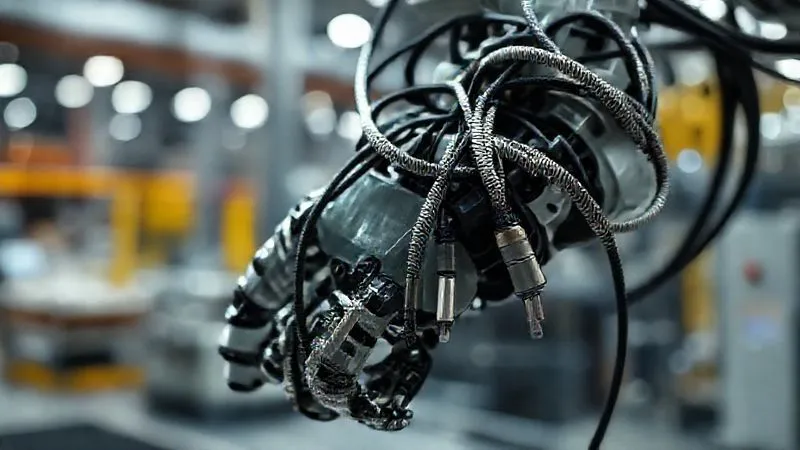
- Cable Integrity: Systematically inspect all sensor cables from the sensor head to the controller. Look for signs of chafing, cuts, kinks, severe bends, or crushing. Pay special attention to areas where cables flex repeatedly, such as near robot joints or cable carriers.
- Connector Security: Check all connectors for tightness. A slightly loose connector can cause intermittent contact, especially under vibration or robot movement. Look for corrosion, bent pins, or signs of overheating.
- Sensor Mounting: Verify that the sensor is securely mounted and not vibrating excessively. Ensure it hasn't shifted, causing misalignment with its target.
- Environmental Contaminants: Inspect sensors for dust, oil, coolant, or other debris that might interfere with their operation. Clean as necessary, following manufacturer guidelines.

I recall a persistent issue where a proximity sensor would intermittently fail. After days of software and electrical checks, a visual inspection revealed a tiny, almost invisible stress fracture in the cable's insulation, only making contact when the robot moved to a very specific, rarely used position.
Phase 2: Deep Dive into Electrical Integrity and Signal Chain
Once initial data is gathered and a visual inspection is complete, the next phase focuses on the electrical path of the sensor signal. This is where many intermittent issues hide.
Wiring and Connection Verification
The physical wiring is often the culprit. Even robust industrial cables can degrade over time due to constant movement, environmental exposure, or improper installation.
- Continuity and Resistance Checks: Use a multimeter to check for continuity on each wire within the sensor cable. Look for unexpected resistance readings, which could indicate a partial break or poor connection. Perform these checks while gently flexing the cable to expose intermittent breaks.
- Insulation Resistance Testing: A megohmmeter (megger) can identify insulation breakdown, where current might intermittently leak to ground or adjacent wires, especially in damp conditions.
- Cold Joints and Solder Integrity: If applicable, inspect solder joints on PCBs or connectors for 'cold joints' – dull, brittle-looking solder that can lead to intermittent contact.
- Terminal Block Security: Ensure all wires are firmly seated in terminal blocks and screw terminals are tightened to the correct torque.
Shielding and Grounding: Proper shielding and grounding are fundamental to signal integrity. Verify that cable shields are correctly terminated at one end (typically the controller side) and that the robot and controller have a robust, common ground. Improper grounding is a frequent cause of intermittent electrical noise.
Power Supply Stability and Noise Analysis
A stable and clean power supply is critical for sensor operation. Fluctuations or noise on the power lines can cause sensors to momentarily drop out or report incorrect values.
"In industrial automation, clean power isn't a luxury; it's a fundamental requirement for reliable sensor performance. Even minor voltage sags or spikes can render precise data worthless." - An Experienced Industry Specialist
- Voltage Measurement: Use a high-quality multimeter or oscilloscope to measure the sensor's supply voltage at the sensor itself, not just at the power supply output. Monitor for intermittent drops or surges.
- Ripple and Noise Analysis: An oscilloscope is invaluable here. Look for AC ripple or high-frequency noise superimposed on the DC supply voltage. This can indicate a failing power supply filter or external electrical interference.
- Load Testing: Observe the power supply voltage under varying robot loads. Sometimes, data loss only occurs when the robot's motors draw significant current, causing a temporary voltage dip.
According to IEEE standards on power quality, even short-duration voltage variations can impact sensitive electronic equipment, highlighting the importance of rigorous power supply diagnostics.
Electromagnetic Interference (EMI) Mitigation
EMI is a pervasive enemy of sensor data integrity. High-current switching devices, variable frequency drives (VFDs), welding equipment, and even unshielded cables can all generate EMI that interferes with low-voltage sensor signals.
- Identify Sources: Look for potential EMI sources near the robot or sensor cabling. These often include power cables running parallel to signal cables, large motors, or induction heating equipment.
- Separation and Routing: Physically separate signal cables from power cables. If they must cross, ensure they do so at a 90-degree angle to minimize coupling.
- Shielding: Confirm that all sensor cables are properly shielded and that the shielding is correctly grounded. Consider adding additional shielding or conduit if necessary.
- Ferrite Cores: Install ferrite cores on sensor cables near the sensor and/or controller to help suppress high-frequency noise.
Phase 3: Pinpointing the Problem: Sensor-Specific Diagnostics
Once you've ruled out general electrical issues, the focus shifts to the sensor itself. Even the most robust industrial sensors can experience internal failures or drift.
Calibration and Drift Assessment
Sensors, especially analog ones, can experience drift over time due to age, environmental exposure, or internal component degradation. This might not be a complete data loss but a gradual shift in accuracy that appears intermittent if it crosses a threshold.
- Recalibration: Follow the manufacturer's recommended procedure for sensor calibration. Use known good references or master parts to verify accuracy across the sensor's operating range.
- Drift Monitoring: If possible, use historical data to identify if the sensor's baseline readings have shifted over time. A sensor that consistently reads slightly off might be drifting, leading to intermittent 'out of range' errors.
Sensor Output Verification (Bench Testing)
The most conclusive way to test a sensor is to remove it from the robot and test it in a controlled environment. This isolates the sensor from the robot's complex electrical and mechanical environment.
- Controlled Input: Provide the sensor with a known, stable input (e.g., a precise distance for a proximity sensor, a specific light intensity for a vision sensor).
- Monitor Output: Measure the sensor's output (voltage, current, digital signal) with an oscilloscope or multimeter. Look for stability, accuracy, and any intermittent fluctuations.
- Stress Testing: While on the bench, simulate the conditions the sensor experiences on the robot. Gently flex its cable, tap its housing, or apply minor temperature changes to see if the intermittent data loss can be reproduced.
For detailed sensor testing procedures, always consult the specific manufacturer's documentation for your robot and sensor model. They often provide diagnostic modes or specific test jigs.
Case Study: The Phantom Proximity Sensor
Case Study: The Phantom Proximity Sensor
I once consulted for a large automotive manufacturer facing intermittent data loss from a critical proximity sensor on a spot-welding robot. The sensor would occasionally report 'part not present' even when a part was clearly in place, causing cycle stops and production delays. The issue was sporadic, occurring perhaps once every 50-100 cycles, making it incredibly difficult to catch.
Initial troubleshooting involved swapping the sensor, checking wiring, and reviewing controller logs – all inconclusive. Applying a systematic approach, we started logging environmental data. We noticed the data loss seemed to coincide with periods of high ambient temperature in the plant, particularly during afternoon shifts.
Further investigation revealed the sensor was mounted on a fixture that underwent slight thermal expansion. During cooler morning operations, the sensor-to-target distance was within tolerance. However, as the plant heated up, the fixture expanded just enough to push the target object a fraction of a millimeter further away, causing the proximity sensor to intermittently drop out of its detection range. The solution was a simple, yet overlooked, mechanical adjustment to the sensor's mounting bracket, allowing for thermal expansion. This small change eliminated the data loss entirely, restoring reliable operation and saving countless hours of future troubleshooting.
Phase 4: Unraveling Software and Controller-Related Issues
While often overlooked when troubleshooting hardware, the robot controller and its software play a crucial role in how sensor data is processed and interpreted. Intermittent data loss can sometimes originate here.
Robot Controller Diagnostics and Error Logs
The robot controller is the brain of the operation. Its diagnostic capabilities are often sophisticated and underutilized.
- Detailed Error Log Review: Go beyond just looking at current alarms. Delve into the historical error logs. Look for recurring warnings or errors that might precede the sensor data loss, even if they don't directly point to the sensor itself.
- Firmware and Software Versions: Verify that the robot controller's firmware and sensor drivers are up-to-date. Outdated software can have known bugs that manifest as intermittent communication issues or incorrect sensor processing.
- Internal Diagnostics: Many controllers have built-in diagnostic routines for I/O modules and communication buses. Run these tests to check the integrity of the hardware interfaces where sensor data is received.
I've seen cases where a minor firmware incompatibility caused an intermittent buffering issue, leading to perceived sensor data loss even though the sensor was functioning perfectly.
Communication Protocol Integrity
Most industrial sensors communicate digitally via protocols like EtherNet/IP, PROFINET, DeviceNet, or IO-Link. Errors in these communication links can mimic sensor data loss.
- Network Diagnostics: For Ethernet-based protocols, use network analysis tools (e.g., Wireshark) to monitor traffic. Look for dropped packets, CRC errors, excessive latency, or retransmissions that could indicate an intermittent network issue.
- Cable and Connector Quality (Digital): Just like analog, digital communication relies on robust cabling. Ensure proper termination, shielding, and cable quality for high-speed industrial networks.
- Protocol Configuration: Verify that the sensor and controller are configured for the correct communication parameters (baud rates, data sizes, update rates). Mismatches can cause intermittent data interpretation errors.
Consult Rockwell Automation's documentation on EtherNet/IP troubleshooting for in-depth guidance on diagnosing network communication issues that could affect sensor data.
Software Logic and Configuration Review
Sometimes, the sensor is fine, the wiring is perfect, but the robot's application program or controller configuration is causing the perceived data loss.
- Debouncing and Filtering: Review the controller's input debouncing settings. If set too aggressively, a fast-changing but valid sensor signal might be filtered out, appearing as a loss. Conversely, if too lax, noise might be interpreted as valid data.
- Polling Rates: Ensure the controller is polling the sensor at an appropriate rate. If the sensor update rate is high but the controller's polling rate is too low, you'll inevitably miss data points.
- Conditional Logic: Examine any conditional logic in the robot program that uses the sensor data. A subtle bug in an 'IF' statement or a timing window could cause the program to misinterpret or ignore valid sensor input intermittently.
Phase 5: Environmental and Mechanical Stressors
The industrial environment is harsh, and sensors are often exposed to conditions that can degrade their performance or cause intermittent failures over time. This phase focuses on external factors.
Temperature and Humidity Fluctuations
Electronics are sensitive to temperature extremes and humidity. Intermittent data loss often correlates with environmental shifts.
- Thermal Cycling: Repeated heating and cooling can cause components to expand and contract, leading to micro-cracks in solder joints or intermittent contact in connectors. Data loss might only occur during specific temperature ranges.
- Condensation: High humidity, especially when combined with temperature drops, can lead to condensation inside sensor housings or connectors, causing short circuits or signal degradation.
- Operating Limits: Verify that the sensor is operating within its specified temperature and humidity limits.
Vibration and Mechanical Wear
Industrial robots are dynamic machines, and the constant movement and vibration can take a toll on sensors and their connections.
- Fretting Corrosion: Constant micro-movements between electrical contacts (e.g., in connectors) can cause fretting corrosion, leading to increased resistance and intermittent signal loss.
- Cable Fatigue: As mentioned earlier, cables subjected to repeated bending and twisting can develop internal breaks that only manifest under specific robot poses or movements.
- Sensor Mounting: Ensure the sensor is securely mounted and isolated from excessive vibration. Loose mounts can cause sensor misalignment or internal damage.
Phase 6: Leveraging Advanced Tools and Predictive Maintenance
For persistent or complex intermittent issues, advanced diagnostic tools and a proactive maintenance strategy become indispensable. These tools offer insights beyond what standard multimeters can provide.
Oscilloscopes and Spectrum Analyzers
These are the indispensable tools for electrical troubleshooting. An oscilloscope allows you to visualize the sensor's analog or digital waveform in real-time, revealing glitches, noise, and timing issues that a multimeter simply cannot detect.
A spectrum analyzer can help identify specific frequencies of EMI that are interfering with your sensor signals, allowing you to target your mitigation efforts more effectively. These tools are critical for diagnosing subtle signal integrity issues.
Thermal Imaging for Hot Spots
Infrared thermal cameras can identify localized hot spots on PCBs, connectors, or cables. Increased resistance due to a loose connection or a failing component often generates heat. An intermittently failing component might only heat up when the fault occurs, making thermal imaging a powerful diagnostic aid.
Data Analytics and Machine Learning for Anomaly Detection
For facilities with extensive data logging capabilities, advanced analytics and machine learning (ML) models can be trained to detect subtle anomalies in sensor data patterns that precede intermittent failures. This shifts the paradigm from reactive troubleshooting to predictive maintenance.
- Baseline Profiling: Establish a normal operational profile for each sensor.
- Anomaly Detection: ML algorithms can identify deviations from this baseline that might be imperceptible to human observation.
- Correlation: Correlate sensor anomalies with other operational parameters (e.g., robot speed, motor current, environmental conditions) to pinpoint root causes more rapidly.
| Diagnostic Method | Time to Diagnose | Proactive Capability |
|---|---|---|
| Traditional Troubleshooting | Days to Weeks | Low |
| Advanced Tooling (Oscilloscope, Thermal Cam) | Hours to Days | Medium |
| Data Analytics & ML | Minutes to Hours | High |
As Forbes Tech Council often highlights, the integration of AI and predictive analytics is transforming industrial maintenance, moving from reactive fixes to proactive prevention, significantly reducing downtime and operational costs.
Frequently Asked Questions (FAQ)
How often should I recalibrate my robot sensors? The frequency of sensor recalibration depends heavily on the sensor type, its operating environment, and the application's required precision. For critical applications or sensors in harsh environments, I recommend a scheduled recalibration every 3-6 months. For less critical applications or stable environments, annual calibration might suffice. Always refer to the sensor manufacturer's guidelines and consider implementing a condition-based monitoring approach where recalibration is triggered by detected drift.
Can software issues really cause intermittent hardware data loss? Absolutely. While the sensor itself might be physically sound, software issues within the robot controller, such as incorrect polling rates, corrupted drivers, timing bugs in the communication protocol stack, or even poorly written application logic, can lead to the controller intermittently failing to receive or correctly interpret valid sensor data. This often presents as 'data loss' from the perspective of the application, even if the hardware is technically sending the data.
What's the first thing I should check when intermittent sensor data loss occurs? In my experience, the very first step should always be to review the robot controller's diagnostic logs and perform a thorough visual inspection of the sensor and its cabling. These two steps, if done meticulously, can often reveal the root cause or at least significantly narrow down the possibilities without needing specialized tools. Look for clear error codes, time correlations, and any obvious physical damage or loose connections.
How important is documentation in troubleshooting intermittent sensor data loss in industrial robots? Documentation is paramount. Without up-to-date electrical schematics, mechanical drawings, sensor specifications, and robot program backups, troubleshooting becomes exponentially more difficult and time-consuming. Good documentation allows you to trace circuits, understand expected sensor behaviors, and revert to known good configurations. It's the roadmap for effective diagnostics, building significant trust in your maintenance procedures.
What role does predictive maintenance play in preventing intermittent sensor data loss? Predictive maintenance (PdM) is a game-changer for intermittent issues. By continuously monitoring sensor performance, environmental conditions, and robot operational parameters, PdM systems can detect subtle deviations or trends that indicate impending failure long before it becomes a critical problem. This allows for proactive intervention, such as scheduled maintenance or component replacement, preventing unexpected downtime and enhancing overall system reliability. It shifts maintenance from reactive to strategic.
Key Takeaways and Final Thoughts
Diagnosing intermittent sensor data loss in industrial robots is undoubtedly one of the more challenging aspects of robotics maintenance. It requires a blend of systematic investigation, deep technical understanding, and often, a touch of detective work.
- Be Systematic: Always start with comprehensive data logging and visual inspection before diving into component-level testing.
- Check the Fundamentals: Electrical integrity (cabling, power, grounding) is often the root cause of elusive issues.
- Don't Forget Software: The robot controller and its software can mimic hardware failures; review logs, firmware, and logic.
- Leverage Advanced Tools: Oscilloscopes, thermal cameras, and data analytics are invaluable for complex problems.
- Document Everything: Good records save immense time and effort in the long run.
By adopting the methodical approach I've outlined, you'll transform the frustrating challenge of intermittent sensor data loss into a manageable diagnostic process. Remember, patience and persistence are your greatest allies. With these strategies, you can restore your industrial robots to their peak performance, ensuring reliable, uninterrupted automation and safeguarding your bottom line.
Recommended Reading
- 7 Pillars: How to Prevent Critical Supply Chain Attacks via Vulnerable Code?
- 7 Steps to Master Debugging Complex Smart Contract Failures in Production dApps
- Unlock Efficiency: How to Optimize Container Image Size for Deployment
- Ransomware Hits: 5 Steps to Rapid Critical Ops Restoration & Recovery
- 7 Reasons Why Automation Projects Fail & How to Prevent Them





0 Comentários: